

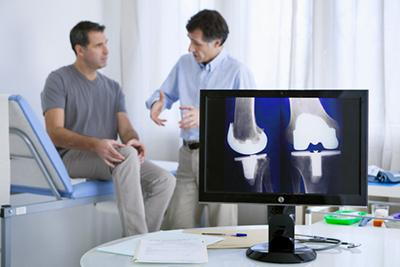
Living with persistent knee pain affects more than just your physical movement; it impacts your quality of life. For many individuals, simple activities like walking, climbing stairs, or getting out of a chair become significant hurdles. When nonsurgical treatments no longer provide sufficient relief, knee replacement surgery often becomes a viable option.
What Is Knee Replacement Surgery?
Knee replacement surgery is a procedure where damaged bone and cartilage are removed from the knee joint and replaced with an artificial joint; the aim is to replicate the knee’s natural motion and function. Orthopedic surgeons remove damaged cartilage surfaces at the ends of the femur and tibia, along with a small amount of underlying bone. These removed sections are then replaced with metal components that recreate the surface of the joint. Sometimes, the underside of the kneecap is also resurfaced. Finally, a medical-grade plastic spacer is inserted between the metal components to create a smooth gliding surface.
What Is It Used For?
The most common reason for knee replacement surgery is severe osteoarthritis, which is a degenerative condition that causes the cartilage that cushions the bones of the knee to wear away over time. As the cartilage diminishes, the bones rub against each other, causing stiffness, pain, and reduced mobility. conditions that may lead to the need for total knee replacement Singapore include:
- Rheumatoid Arthritis: An autoimmune disease where the synovial membrane that surrounds the joint becomes inflamed and thickened. This chronic inflammation can damage the cartilage and eventually cause cartilage loss, pain, and stiffness.
- Post-traumatic Injury: This can follow a serious knee injury. Fractures of the bones surrounding the knee or tears of the knee ligaments may damage cartilage over time, causing knee pain and limiting knee function.
Candidates for this surgery usually experience severe knee pain or stiffness that limits everyday activities.
What Should You Expect?
Preparation for surgery typically begins weeks before the actual procedure, not including the initial consultation. Your orthopedic team will likely require pre-operative testing, which may include blood tests, an electrocardiogram, and a physical examination. These are utilized to confirm you are healthy enough for surgery.
Day of the Surgery
On the day of the operation, an anesthesia team may discuss the type of anesthesia you will receive. The surgery itself generally takes one to two hours. The surgeon removes the damaged bone and cartilage and positions the new implants to restore the alignment and function of your knee.
Hospital Recovery
Some patients stay in the hospital for a day following surgery. Pain management is a priority immediately after the procedure. You will likely begin working with a physical therapist soon after your surgery, maybe as soon as the following day. Early movement encourages blood flow and helps prevent complications like blood clots. You will learn specific exercises to strengthen your affected leg and restore knee movement.
Rehabilitation at Home
Recovery continues well after you leave the hospital, and you will likely need a walker or crutches for several weeks. Physical therapy remains a central part of your routine for several months. Adhering to the prescribed exercise regimen helps restore range of motion and strength. Most patients resume normal daily activities after around six weeks, though higher-impact activities may need to be avoided indefinitely to protect the new joint.
Speak With an Orthopedic Surgeon
Every patient’s anatomy and condition present unique challenges and requirements. While general information provides a framework for understanding the procedure, only a qualified medical professional can offer specific guidance tailored to your health profile. An orthopedic surgeon can evaluate your health status and help determine if knee replacement is the right step for your long-term mobility goals.
- Planning Chiropractic Visits Around Pain, Recovery, and Daily Life
- When Should You Speak to a Casselberry Car Accident Lawyer?
- How Corporate Lawyers Help Companies Manage Risk and Compliance
- Ken Raymie: Why a Healthy Work-Life Balance Matters for Today’s Workforce
- How to Buy Antique Furniture at Auction Without Overpaying