

Key Takeaways
- The best neighborhood is one that fits your daily routine, budget, and plans for the next several years.
- Commute time, transit access, parking, street noise, hills, and natural light can have as much impact as a home’s interior.
- Compare full ownership costs, including taxes, insurance, dues, utilities, repairs, and transportation.
- Review more than one source when researching neighborhood boundaries, local amenities, and planned changes.
Buying in Seattle is about more than finding a home with the right number of bedrooms or an updated kitchen. The neighborhood you choose shapes your commute, recurring costs, access to services, weekend routine, and future flexibility. A clear comparison process can help you make a decision based on how you will actually live, rather than on a listing’s first impression. For buyers who want a local perspective while researching options, Seattle, WA, real estate experts Lake & Company Real Estate offer property search tools, neighborhood information, home valuation resources, and buying and selling guidance. Lake & Company Real Estate has served the Seattle market since 1982 from its Green Lake location, with experience across Seattle, North Seattle, and nearby Puget Sound communities. That long-standing local focus can be especially useful when comparing the practical differences between areas that may look similar on a map.
Why the Neighborhood Matters as Much as the Home
Two homes with similar prices can provide entirely different lifestyles. A smaller townhome near the light rail may reduce driving, make errands easier, and create more free time during the week. A larger detached home farther from work may offer more space and a yard, but it could also mean a longer commute, greater maintenance needs, and greater reliance on a car. Think beyond broad labels such as “popular” or “up-and-coming.” Consider the sidewalks you will use, the grocery store you will visit, the noise you will hear with windows open, and the ease of getting home on a rainy weekday. These details also influence resale appeal because future buyers will evaluate the same trade-offs.
Step One: Define Your Real Priorities
Before touring homes, create a short list of non-negotiables and preferences. This helps prevent attractive finishes from distracting you from the practical factors that matter most after closing.
- Set a comfortable maximum monthly housing payment, not just a maximum purchase price.
- Identify regular work locations and the longest commute you can reasonably accept.
- Decide whether you need a garage, yard, home office, storage, or an extra bedroom.
- Rank the importance of quiet streets, walkability, parks, restaurants, schools, or nightlife.
- Consider pets, children, aging relatives, remote work, and expected length of ownership.
Step Two: Compare Areas by Daily Lifestyle
Urban and Walkable Areas
In denser neighborhoods, look at restaurant and retail access, sidewalks, traffic patterns, transit, building types, and late-night activity. Convenience may be excellent, but parking, noise, and shared-wall living can be part of the trade-off.
Residential and Quiet Areas
In lower-density locations, compare lot sizes, street parking, yard maintenance, nearby parks, school routes, and travel times. A quieter block may provide more privacy, but it may place everyday services farther away.
Outdoor-Focused and Transit-Oriented Areas
Check practical access to trails, beaches, lakes, bike routes, and green space rather than assuming a nearby park is easy to reach. For transit-oriented homes, walk the route to the station or bus stop and assess hills, crossings, service frequency, lighting, and potential rail or road noise.
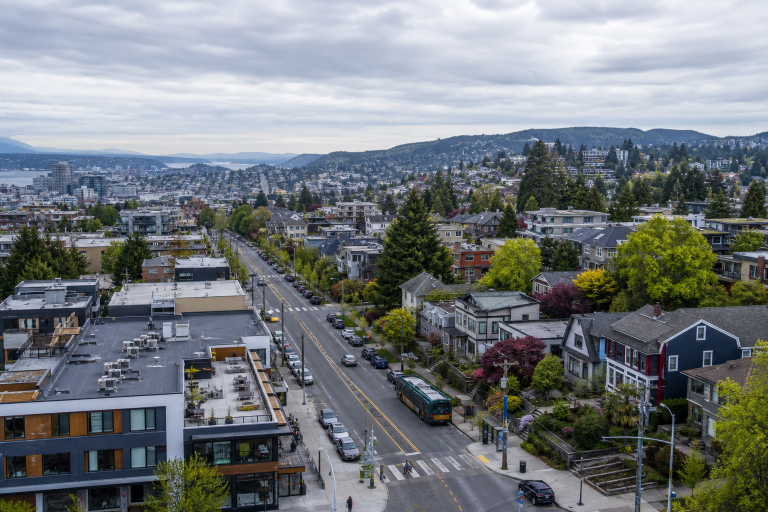
North Seattle buyers might compare Green Lake, Wallingford, Greenwood, Northgate, Lake City, Shoreline, and Bothell differently depending on space needs and commuting patterns. Start with three to five realistic areas to keep your research focused.
Step Three: Test the Commute at Real Times
Seattle distance can be misleading. Water, bridges, hills, freeway access, construction, and peak-hour traffic often make a short route feel much longer. Test the experience, not just the mileage.
- Drive or take transit during your normal morning commute window.
- Check the return trip during afternoon or evening traffic.
- Identify backup routes for incidents, weather, or construction.
- Walk from the property to the nearest stop, main street, or parking area.
- Estimate the weekly cost of fuel, parking, tolls, or transit fares.
Step Four: Compare Home Types, Not Just Prices
Price alone does not reveal the whole ownership experience. Compare the responsibilities attached to each property type.
- Single-family homes: Often provide privacy and outdoor space, but may require greater spending on roofs, drainage, landscaping, and major systems.
- Townhomes: May offer a lower entry point and less yard work, but shared walls, parking arrangements, and maintenance responsibilities deserve review.
- Condos: Can place buyers close to amenities with less exterior upkeep, but dues, reserves, building rules, and potential assessments are important.
- Older homes: May offer character and larger lots, but inspections should pay close attention to wiring, plumbing, foundations, drainage, roofs, and seismic upgrades.
Step Five: Build a Full Monthly Cost Estimate
Your mortgage payment is only one line in the budget. Include principal and interest, property taxes, insurance, association dues, utilities, garbage service, routine repairs, seasonal upkeep, and commuting costs. For condos or properties with shared infrastructure, ask about reserve studies, recent projects, upcoming work, and the possibility of special assessments. Property taxes should be reviewed before you finalize a target budget. King County provides residential property tax information to help buyers understand assessments, tax statements, and records tied to a particular property.
Step Six: Use Local Data With Care
Data is valuable when it supports a broader evaluation. Focus on recent closed sales that match the home you are considering in terms of condition, square footage, parking, lot characteristics, and micro-location. Current asking prices can show competition, but they do not confirm what buyers have actually paid. Also, review days on market, price changes, and inventory for the specific property type you want. Neighborhood names and boundaries can vary by resident, listing, and map provider, so use official maps as a starting point, then evaluate each street in person.
Step Seven: Review the Street, Not Just the Listing
- Visit once in daylight and once after dark.
- Listen for traffic, trains, aircraft, nearby businesses, and event activity.
- Check sidewalks, street lighting, crossings, driveway slope, and parking availability.
- Look for standing water, drainage concerns, retaining walls, and steep access points.
- Walk several blocks to find grocery options, parks, transit, and everyday services.
- Ask about nearby construction, zoning changes, or projects that could affect access, noise, or views.
Questions to Ask Before Making an Offer
- How long has the property been available, and have there been price changes?
- What nearby closed sales best support the likely value?
- Are permits available for remodels, additions, or major systems work?
- Are there known roof, sewer, drainage, foundation, or electrical concerns?
- What costs are likely during the first two years of ownership?
- Does the property fall within a historic district or another special review area?
A Simple Neighborhood Scorecard
For each neighborhood, give every category a score from one to five and add brief notes:
- Monthly cost: Payment, taxes, insurance, dues, utilities, and upkeep.
- Commute: Travel time, transit access, parking, and alternate routes.
- Home condition: Age, systems, repairs, and renovation needs.
- Daily lifestyle: Walkability, parks, shops, noise, and overall comfort.
- Future fit: Space needs, resale considerations, and expected length of ownership.
Final Checklist Before Choosing an Area
- Confirm that you’re comfortable with your all-in monthly budget.
- Shortlist three to five neighborhoods.
- Test commute routes during realistic travel times.
- Visit each area at different times of day.
- Compare recent sales and current inventory.
- Review taxes, insurance, dues, and likely repair costs.
- Choose the location that supports your real routine, not just your ideal listing.
The right Seattle neighborhood is not always the one with the newest home or the lowest asking price. It is the area that makes your budget, commute, lifestyle, and plans work together with fewer compromises.
- A Practical Checklist for Choosing a Furnished Rental During a Detroit, Michigan Work Assignment
- Selling a House in Olive Branch, MS: A Practical Guide to Price, Pace, and Paperwork
- A Practical Home-Sale Checklist for Lakeland, Tennessee Homeowners
- After Death And Meaning: A Practical Guide To Grief, Hope, And End-Of-Life Conversations
- What to Do in the First Few Minutes of a Suspected Cardiac Arrest