

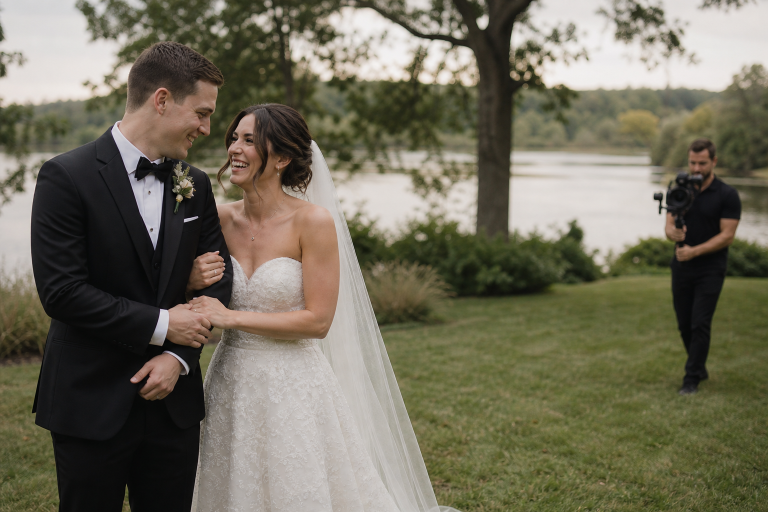
A wedding film feels natural when it reflects the way your day actually unfolded, including the nerves, laughter, quiet conversations, and unexpected moments that cannot be recreated. The goal is not to perform for the camera. It is to create enough space for your personalities, relationships, and celebration to come through naturally.
Working with a filmmaker whose approach matches your priorities is an important first step. For example, Adam Gorham Films can help couples think beyond a polished highlight reel and focus on the personal details that make a wedding story worth revisiting for years.
What Makes a Wedding Film Feel Natural?
A natural film is story-led rather than staged. It doesn’t mean every shot is accidental, but a skilled filmmaker focuses on composition, light, sound, and pacing. The final film is built around genuine interactions, not reenacted emotions. Small moments like a nervous laugh, fixing a collar, a hand squeeze, or friends cheering often carry the most meaning. Wedding videography varies stylistically, but the best films highlight real movement, conversations, and pauses, not constant posing. For more on the craft, see this overview of wedding videography.
Start With a Clear Film Vision
Before booking, decide on the film’s feel: a documentary with natural audio, a cinematic piece with portraits and music, a classic record of the day, or a mix. Clarity helps decision-making. Share inspirations without scripting: list films, scenes, colors, moods you like, such as warm, playful, intimate, energetic, or quiet, and early share details like family traditions, favorite people, meaningful locations, cultural elements, and essential moments like important people, letters, gifts, a special dance, or a significant exit. Keep the must-have list short; avoid turning every moment into a shot list, as the best footage often comes from spontaneous moments.
Leave Room for Real Moments
A packed schedule makes it harder to be present and harder to film naturally. When every transition is rushed, you are more likely to spend the day moving from one obligation to the next instead of enjoying the people around you.
Build in brief pauses after the first look, the ceremony, portraits, and speeches. Even ten or fifteen minutes can give you time to breathe, talk privately, greet guests, or simply take in the setting. Those unscripted exchanges frequently become the emotional center of a wedding film.
Build a Timeline That Supports the Story
A film-friendly schedule covers the major events while leaving enough flexibility for real life. Consider including:
- Getting-ready coverage with details and close family or friends.
- Letters, gifts, or private voice messages.
- A first look at the ceremony entrance.
- Vows, readings, and musical performances.
- Family portraits and relaxed couple portraits.
- Reception entrances, speeches, and toasts.
- The first dance, parent dances, and open dancing.
- A final-night portrait or a private closing moment.
Account for travel time, weather, room changes, guest movement, and makeup or wardrobe delays. A 15-minute buffer before sunset portraits, for example, can prevent stress if the ceremony runs late and still allow time for beautiful outdoor footage. The best timeline is rarely the busiest one.
Give Audio the Attention It Deserves
Visuals show what happened, but audio often brings the memory back to life. Clear vows, speeches, laughter, applause, ambient room sound, and live music make a film feel immediate and personal. Ask how the ceremony and reception audio will be recorded, whether backup recorders are used, and whether full ceremony and speech edits are included.
Outdoor ceremonies, large ballrooms, and venues with strict sound policies can create challenges, so confirm the venue rules before the wedding day. Music also requires careful consideration. A favorite commercial song cannot automatically be used in a professionally shared film. The U.S. Copyright Office guide to music copyright explains why musical compositions and recordings may have separate rights, which is why many filmmakers use properly licensed tracks.
Choose Music That Fits the Couple
Instead of naming a single song, describe the desired emotional feel, warm and nostalgic, playful, elegant, or dramatic, and list sounds you dislike. This guides the editor to select music that complements the speech without overpowering it. Choose timeless, personality-matching tracks over trendy ones, as they age better and support the spoken audio effectively.
Prepare the Venue and Lighting
Your venue impacts the final film more than many couples realize. Elements like natural light, window placement, ceiling height, room size, aisle width, and background clutter influence camera angles and exposure. Ask about filming restrictions, camera placement, and if lighting can be adjusted during key moments. Schedule portraits in soft morning or evening light. If rain is possible, find an indoor backup with a clear background and enough space. Dark reception rooms look good, but filmmakers need advance notice if dramatic uplighting, sparklers, or a dim dance floor are planned.
Feel More Comfortable on Camera
Most couples aren’t trained performers and don’t need to be. Focus on each other, not the lens. Use gentle prompts instead of rigid poses, discuss the proposal, share early observations, or enjoy quiet moments without aiming for perfection. Meet with your filmmaker first; a good connection makes direction easier and helps you relax, letting the day unfold naturally.
Questions to Ask Before Booking
- Can we watch full wedding films, not only short trailers?
- How will the ceremony and reception audio be recorded and backed up?
- How many hours, cameras, and crew members are included?
- What is the plan if the weather or the timeline changes?
- Are full ceremony and speech edits delivered?
- How are files backed up during and after the wedding?
- What is the expected delivery timeline and revision process?
- How can we share the finished film privately with loved ones?
Simple Wedding Film Checklist
- Choose a film style and share meaningful personal details.
- Review complete examples before booking.
- Protect open space in the timeline.
- Confirm venue rules, lighting plans, and weather backups.
- Ask specific questions about audio, backups, and deliverables.
- Share your music preferences and the styles you avoid.
- Prioritize enjoying the day over performing for the camera.
Final Thoughts
A natural wedding film begins long before the camera turns on. It comes from a clear vision, thoughtful timing, reliable audio, appropriate music, and enough freedom for real moments to unfold. When you create a day that feels comfortable and true to you, the final film can feel less like a production and more like an honest memory.
- Staying Active With Adult Scoliosis in Denver, Colorado: Daily Habits, Exercise, and Care Choices
- 6 Resources That Can Support An Ohio Federal Drug Conspiracy Defense Strategy
- Medical Misdiagnosis And Your Legal Rights
- Finding Tranquility: The Benefits of Day Spa Treatments and Massage Therapy
- Enhancing Curb Appeal: Exterior Home Improvements and Maintenance