

Key Takeaways
- A changing area should be stable, clean, easy to find, and simple to use.
- Stations should be available to all caregivers, rather than limited to a single type of restroom.
- Good planning includes access to handwashing, waste disposal, adequate space, lighting, and clear signs.
- Routine cleaning and safety inspections are as important as the original installation.
- Facilities should distinguish between infant changing stations and larger universal changing spaces.
Across New South Wales, families need practical places to care for babies while visiting shopping centers, cafés, beaches, health services, libraries, transport hubs, and public buildings. A thoughtfully planned changing area reduces stress for caregivers and helps keep infant care off unsuitable surfaces such as floors, benches, and vehicle seats. Commercial options such as Babymedi baby changing stations can provide facilities with a dedicated, wall-mounted solution, but the surrounding layout, cleaning routine, and accessibility plan are equally important.
For NSW venue managers, a baby changing station is not simply an extra restroom fitting. It is part of the visitor experience. Parents, grandparents, carers, and people traveling with young children should be able to find a clean, stable, well-maintained space without having to ask staff for directions or improvise in a crowded public area.
Why Public Changing Areas Matter
A family-friendly restroom allows a caregiver to respond to a child’s needs promptly and with dignity. This matters in busy NSW settings where visitors may be away from home for hours, including regional road trips, city shopping precincts, community events, and coastal destinations. When there is no suitable station, caregivers may be pushed toward uncomfortable, unhygienic, or unsafe alternatives.
A dedicated area also supports cleaner shared facilities. A washable changing surface, a nearby bin, and accessible handwashing supplies make it easier for users to manage nappies and wipes responsibly. NSW health services already recognize the value of purpose-built family amenities.
What Makes a Baby Changing Station Safe?
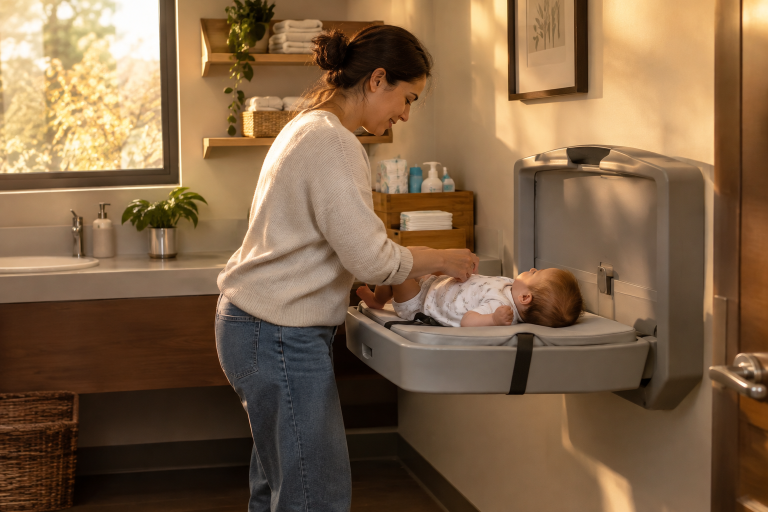
Safety begins with selecting equipment intended for commercial use and installing it exactly as specified by the manufacturer. A changing station must be securely fixed to a suitable supporting structure, with no loose fittings, sharp edges, damaged hinges, or visible movement when opened.
Essential Safety Features
- A secure wall connection or a stable supporting frame.
- A firm, level surface that does not shift or flex during normal use.
- An adjustable safety strap that is easy to use and clean.
- Rounded edges and smooth finishes that minimize snagging and discomfort.
- Clear weight limits and straightforward operating instructions.
- A location that lets the caregiver remain close and keep one hand on the child.
No strap or fixture replaces supervision. Signs should clearly remind users never to leave a baby unattended, even for a moment.
Hygiene Features That Support Better Care
High-traffic public toilets require surfaces that staff can wipe down quickly and thoroughly. Smooth, non-porous materials are generally easier to clean than heavily textured finishes, while an antimicrobial treatment should be considered an added feature rather than a replacement for cleaning.
The best setup places a hand basin, soap, hand-drying option, and a lined waste bin within practical reach. A dispenser for liners or wipes can be useful when staff can reliably restock it. Facilities should also choose cleaners compatible with the station’s materials, as harsh or unsuitable products can damage surfaces and make them harder to maintain.
Designing for Every Caregiver
Changing stations belong wherever caregivers can reasonably use them. Providing them only in women’s toilets can exclude fathers, male relatives, support workers, and other carers. Where space permits, NSW facilities should consider stations in women’s, men’s, accessible, and family or all-gender restroom areas.
Clear symbols near the main entrance can indicate where the changing table is located. If a venue has a separate parent room, it should be easy to find from common areas and should not require a staff member to unlock it unless there is a genuine operational reason.
Plan the Room Around the Station
Even a good unit can be difficult to use when the room is poorly arranged. Before installation, facility managers should test the intended space from the perspective of someone carrying a baby, pushing a pram, or using a mobility aid.
- Leave clear room for a pram, wheelchair, nappy bag, and turning movement.
- Avoid walls beside swinging doors, queues, or busy circulation paths.
- Keep the unit away from splash zones around basins and toilets.
- Provide lighting that is bright enough for care tasks without harsh glare.
- Position bins and handwashing supplies so users do not need to step away from the child.
- Where possible, avoid placing loud hand dryers directly beside the baby’s head.
Cleaning and Inspection Checklist
Busy facilities should build changing-station checks into each restroom cleaning round. A simple written log gives staff a consistent routine and helps managers identify recurring maintenance issues.
- Check the surface for waste, spills, damage, and graffiti.
- Clean the full changing surface, strap, latch, and accessible surrounding touchpoints.
- Inspect hinges, fasteners, wall connections, and the opening mechanism.
- Empty or refill the nearby waste bin as needed.
- Restock liners, wipes, paper products, soap, and hand-drying supplies where provided.
- Remove the station from service promptly if it is unstable, damaged, or unable to latch correctly.
- Record the issue and direct visitors to the nearest available alternative.
Accessibility and Universal Changing Areas
A standard infant station and a universal changing table serve different needs. Infant stations are designed for babies and young children during nappy changes. Universal changing areas are larger, supported spaces for people who require help with toileting, including older children and adults with disability or medical needs.
Facilities should assess both needs during renovations and new-build planning. Recent work on technical requirements for universal changing stations highlights the importance of privacy, adequate space, sanitation, and access for carers. Although NSW projects must follow applicable Australian requirements, the underlying design questions are useful: Can a user and carer enter safely, move comfortably, and complete personal care with dignity?
Signs, Supplies, and User Instructions
Small details can make a restroom feel dependable. Use simple signs to identify the closest changing facility, display a short supervision reminder, and provide a visible way to report damage or missing supplies. If a station is temporarily closed, place directions to the nearest working alternative at the restroom entrance rather than leaving visitors to discover the problem after entering.
Common Mistakes to Avoid
- Installing a station where an open door can strike the user or equipment.
- Putting the table too far from a bin or handwashing point.
- Providing a station in only one restroom in a multi-restroom venue.
- Allowing straps, hinges, or latches to go uninspected.
- Using unclear signs or placing the only facility behind a staff-only door.
- Forgetting to allow room for a pram or mobility device.
Conclusion
For public venues across New South Wales, a baby changing area should be clean, stable, visible, and inclusive. The strongest approach combines suitable equipment with sensible room planning, dependable supplies, clear directions, and regular inspections. When facilities plan for the full range of caregivers and users, they create restrooms that are more practical, welcoming, and dignified for the whole community.
- Public Restroom Baby Changing Stations in New South Wales, Australia: Safety, Hygiene, and Inclusive Design
- 5 Tampa Divorce Lawyers To Consider For Family Law Guidance
- Hypothyroidism and Constipation: Understanding the Thyroid–Gut Connection
- Staying Active With Adult Scoliosis in Denver, Colorado: Daily Habits, Exercise, and Care Choices
- 6 Resources That Can Support An Ohio Federal Drug Conspiracy Defense Strategy