

Core Benefits of Professional Event Audio and DJ Services
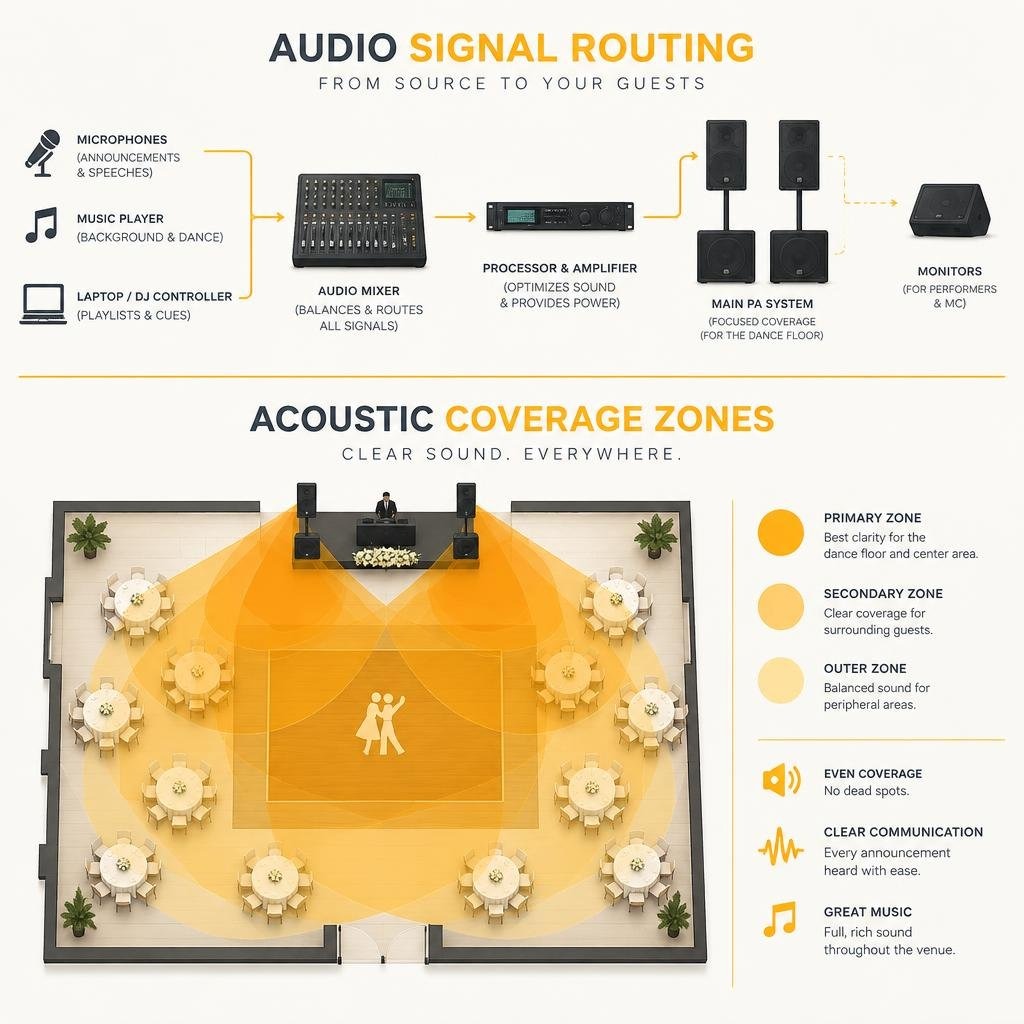
Imagine your special day, meticulously planned, suddenly marred by muffled speeches, feedback-laden announcements, or awkward silences. We know that behind every truly unforgettable event lies a seamless orchestration of sound and presentation. For weddings especially, every word, every song, and every announcement shapes the magic.
Ensuring guests hear clearly and feel fully engaged demands more than just a playlist; it requires expert coordination and state-of-the-art equipment. A professional wedding announcements MC, combined with superior audio engineering, transforms an ordinary gathering into an extraordinary experience. We believe clear communication and flawless audio are the bedrock of any successful celebration, guiding guests through key moments like grand entrances, heartfelt toasts, and the first dance.
In this comprehensive guide, we will explore the critical role of professional event audio and dedicated MC services in creating memorable occasions. We will delve into how expert sound management, from acoustic optimization to multi-zone amplification, complements the dynamic presence of a skilled MC. We’ll also cover essential technical components and best practices to ensure your event’s audio is perfect, showcasing the value of robust audio solutions provided by companies offering Charlottesville wedding DJ. Join us to discover how to prevent acoustic hiccups and elevate your event’s sonic landscape, ensuring every announcement resonates perfectly.
The success of any event, particularly a wedding, hinges significantly on its auditory experience. When we talk about professional event audio, we’re discussing a comprehensive approach that goes far beyond simply playing music. It encompasses meticulous sound balance, ensuring that every instrument, vocal, and announcement is heard with clarity and appropriate volume. Acoustic optimization is paramount, as every venue, whether an opulent ballroom or a rustic barn, presents unique sonic challenges. Professionals meticulously analyze the space to manage frequency response, minimizing echoes and maximizing intelligibility. This careful frequency management ensures that bass doesn’t overwhelm, and treble isn’t piercing, creating a pleasant listening experience for all guests.
Speech clarity is perhaps the most crucial element, especially for wedding announcements. Imagine the disappointment if heartfelt vows or a touching toast are lost to poor audio quality. Professional services guarantee that every word from the officiant, the couple, or the toast-givers is crystal clear. Beyond technical aspects, a professional service also excels in timeline pacing, ensuring that musical cues, announcements, and transitions flow seamlessly, maintaining the desired energy and mood throughout the event. This often involves sophisticated multi-zone amplification, where different areas of the venue—such as the ceremony space, cocktail hour, and reception area—can have independent yet synchronized audio, ensuring consistent sound quality regardless of where guests are situated. For those seeking comprehensive event solutions, dedicated providers of professional wedding DJ services offer this integrated approach, ensuring every auditory detail is expertly managed.
Live Sound Reinforcement vs. Standard Playback
The distinction between live sound reinforcement and standard playback is critical for event planners. Standard playback, often handled by basic sound systems, simply amplifies pre-recorded music or announcements. While adequate for casual gatherings, it lacks the sophistication required for dynamic events. Live sound reinforcement, on the other hand, involves active management of audio in real-time. This includes precise decibel control, ensuring that music and speech are loud enough to be heard but never uncomfortably so, adapting to varying crowd sizes and room dynamics.
A key challenge in live audio is feedback suppression. The dreaded screech of a microphone can instantly disrupt an event’s atmosphere. Professional audio engineers employ advanced techniques and equipment to identify and eliminate feedback before it occurs, ensuring smooth, uninterrupted sound. Frequency coordination is another vital aspect, especially when multiple wireless microphones or instruments are in use. Professionals manage the radio frequency spectrum to prevent interference, guaranteeing reliable microphone performance. Proper gain staging—the process of setting optimal signal levels at each stage of the audio chain—is fundamental to achieving clear sound without distortion. Furthermore, understanding and mitigating acoustic reflections within a venue is crucial. Hard surfaces can cause sound to bounce, leading to echo and muddiness. Professional engineers strategically place speakers and use acoustic treatments where possible to control reflections, delivering crisp and intelligible audio throughout the space.
Dual Roles of Master of Ceremonies and Audio Engineering
The synergy between a skilled Master of Ceremonies (MC) and expert audio engineering is the backbone of a truly engaging event. The MC is the conductor of the celebration, responsible for crowd engagement, keeping guests informed, entertained, and energized. Their ability to read the room, tell captivating stories, and facilitate interactions is invaluable. However, even the most charismatic MC can be undermined by poor audio.
This is where the audio engineer steps in, ensuring the MC’s voice is perfectly amplified and heard by every guest. Announcement timing is critical; a professional MC, working in tandem with the audio team, ensures that key moments—like the grand entrance, the first dance, or the cake cutting—are announced with perfect precision and impact. Transition pacing, the seamless shift from one segment of the event to the next, relies heavily on both the MC’s flow and the audio engineer’s ability to cue music and adjust levels without jarring interruptions. Vocal clarity for the MC is paramount, achieved through high-quality microphones, proper gain settings, and careful equalization. Finally, run-sheet coordination between the MC and the audio team is essential. This detailed plan outlines every announcement, musical cue, and special moment, allowing both professionals to work in harmony, anticipating needs and executing transitions flawlessly. This collaborative approach ensures that the event unfolds smoothly, with every spoken word and musical note contributing to an unforgettable experience.
Essential Technical Components of High-Impact Event Sound
Achieving high-impact event sound requires a sophisticated array of technical components, each playing a crucial role in delivering clarity, power, and fidelity. At the heart of any sound system are audio transducers, which convert electrical signals into sound waves (speakers) and sound waves into electrical signals (microphones). High-quality transducers are fundamental for capturing and reproducing sound accurately. For larger venues or events requiring broad, even coverage, line arrays are often employed. These systems consist of multiple speakers arranged in a vertical line, designed to project sound uniformly across a wide area, minimizing volume discrepancies between the front and back of the audience.
Digital signal processing (DSP) units are indispensable for fine-tuning audio. These powerful processors can apply equalization, compression, and effects in real-time, allowing engineers to optimize sound for the specific acoustics of any venue. Wireless communication is often facilitated by UHF microphones, which operate on Ultra High Frequency bands, offering greater range and reliability compared to VHF systems, crucial for an MC who needs freedom of movement. For robust bass response, cardioid subwoofers are utilized. Unlike standard subwoofers that project sound in all directions, cardioid subwoofers are designed to direct bass forward, reducing unwanted low-frequency spill onto the stage or other areas, and preventing muddiness. Understanding how these components work together is key to appreciating the depth of professional audio engineering.
Feature Cardioid Microphone (Speech) Omnidirectional Microphone (Ambient/Room) Pickup Pattern Heart-shaped, primarily picks up sound from the front. Spherical, picks up sound equally from all directions. Best Use Solo vocals, speeches, minimizing background noise. Room ambiance, group discussions, capturing natural soundscapes. Feedback Risk Lower, due to directional pickup. Higher, as it picks up more ambient sound and speaker output. Proximity EffectPronounced bass boost when very close to the source. Minimal to none. SensitivityMore sensitive to sounds directly in front. Equally sensitive to sounds from all angles. Application MC announcements, officiant, toast-givers. Capturing audience reactions, ambient music during cocktail hour.
Technical Standards in Professional Event Audio and DJ Services
Adhering to rigorous technical standards is non-negotiable for professional event audio and DJ services. These standards ensure not only superior sound quality but also the reliability and stability of the entire system. Latency reduction is a prime example; this refers to minimizing the delay between a sound being made and it being heard. In live events, even milliseconds of delay can lead to an uncomfortable echo or lip-sync issues, so professionals use equipment designed for ultra-low latency.
Dynamic compression is another critical technique, used to reduce the difference between the loudest and quietest parts of an audio signal. This prevents sudden loud sounds from peaking and distorting, while also making quiet passages more audible, resulting in a more consistent and pleasant listening experience. Audio backup systems are essential for preventing catastrophic failures. This includes redundant microphones, mixers, and even entire sound systems that can be quickly switched over in case of primary equipment malfunction. Spectrum management is vital in today’s wireless-heavy environment. With numerous wireless devices (microphones, in-ear monitors, communications systems) operating simultaneously, professionals meticulously plan and manage frequency allocation to prevent interference and dropouts. Finally, power conditioning protects sensitive audio equipment from voltage fluctuations, surges, and electrical noise, ensuring clean power delivery and preventing damage or performance issues. These technical safeguards are what elevate professional services above amateur setups.
Managing Multi-Zone Sound for Seamless Transitions
In many event venues, particularly those with multiple distinct areas like a ceremony space, cocktail lounge, and main reception hall, managing multi-zone sound is crucial for a seamless guest experience. Zone routing allows audio engineers to direct specific audio signals to different areas. For instance, background music can play in the cocktail area while the main reception hall is prepared, or a live speech can be routed only to the ceremony space.
Delay fills are small, strategically placed speakers used to reinforce sound in areas far from the main speaker system. These are timed with a slight delay to compensate for the time it takes for sound to travel from the main speakers, ensuring that guests in the back hear the sound at the same time as those in the front, preventing echoes and improving intelligibility. Outdoor acoustics present unique challenges, as there are no walls to contain sound or prevent reflections. Professionals use specialized outdoor-rated speakers and techniques to project sound effectively without disturbing surrounding areas, accounting for factors like wind and ambient noise. Wireless audio transmitters are often employed to send signals to remote zones without the need for extensive cabling, offering flexibility and reducing setup time. Volume zoning allows for independent control of volume levels in each area, ensuring that music or announcements are at an appropriate level for the activity in that specific zone, whether it’s a quiet conversation area or a lively dance floor. This meticulous approach to multi-zone sound ensures a consistent and enjoyable auditory experience for every guest, everywhere in the venue.
Coordinating Sound Engineering with Master of Ceremonies Execution
The successful execution of an event’s audio and announcements is a finely choreographed dance between the sound engineering team and the Master of Ceremonies. This coordination begins long before the event day, often with detailed cue sheets that outline every announcement, musical interlude, and special moment. These sheets serve as a shared roadmap, ensuring both the MC and the audio engineer are perfectly aligned on timings and requirements. For grand entrances, the MC’s enthusiastic introduction must be perfectly timed with the chosen music and the couple’s arrival, creating an impactful moment. Similarly, first dance cues require seamless coordination, with the MC introducing the dance and the DJ fading in the music at precisely the right instant.
Toast acoustics are paramount; the MC needs to guide speakers on microphone technique, and the audio engineer must ensure the microphone is properly set up, free of feedback, and the speaker’s voice is clear and audible to all. In our increasingly diverse world, multilingual hosting is becoming more common. An MC fluent in multiple languages can bridge cultural gaps, making all guests feel included. The audio team supports this by ensuring that all announcements, regardless of language, are transmitted with the highest clarity. This integrated approach, where the MC’s performance and the audio engineering are harmonized, creates an event that feels effortlessly smooth and professionally managed.
Integrating Professional Event Audio and DJ Services for Receptions
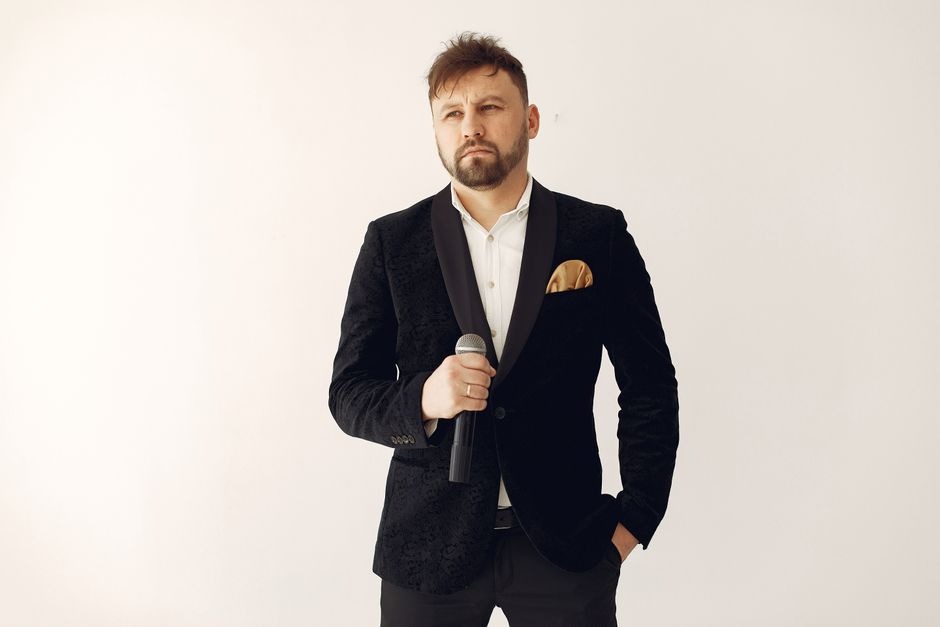
The reception is often the most dynamic part of a wedding, and its success relies heavily on the seamless integration of professional event audio and DJ services. Script customization is a key element, where the MC’s announcements are tailored to the couple’s story, inside jokes, and specific preferences, making the event feel deeply personal. This goes hand-in-hand with timeline synchronization, ensuring that every element, from the bridal party introductions to the bouquet toss, occurs exactly as planned, keeping the event flowing smoothly without awkward pauses.
Audio ducking is a sophisticated technique where the music volume is automatically lowered when the MC speaks, allowing their voice to be heard clearly without being drowned out by background sound. This ensures that important announcements are never missed. Entrance fanfare, whether it’s a specific song or a custom sound effect, adds excitement to each bridal party member’s introduction, setting a celebratory tone. Beyond formal announcements, crowd interaction is vital for maintaining energy. A skilled DJ and MC team will engage guests, encourage participation in games, and get everyone on the dance floor, ensuring the reception is not just an event, but a vibrant celebration. This holistic integration of services transforms a reception into a truly unforgettable party.
Preventing Acoustic Hiccups During Key Event Announcements
Preventing acoustic hiccups during key event announcements is a hallmark of professional audio services. One of the most common issues is improper microphone technique. Guests giving toasts often hold the microphone too far away or too close, or speak across it rather than into it. The MC and audio engineer work together to guide speakers, ensuring they understand how to use the microphone effectively. The proximity effect, a phenomenon where bass frequencies are boosted when a speaker is very close to a directional microphone, can make voices sound boomy or indistinct. Professionals manage this through microphone selection and equalization.
Rigorous sound check protocols are essential before any event begins. This involves testing every microphone, speaker, and audio channel, ensuring all levels are correct, and checking for potential feedback or interference. This proactive approach identifies and resolves issues before they can impact the live event. Frequency intermodulation, a complex technical issue where multiple wireless signals interact to create unwanted noise, is meticulously managed by professionals through careful frequency planning and monitoring, preventing dropouts or static. Finally, ambient noise monitoring is crucial, especially in venues with varying background sounds. The audio engineer constantly adjusts levels to ensure announcements cut through any crowd chatter or environmental noise, maintaining optimal clarity. By addressing these potential pitfalls with expertise and precision, professional services guarantee that every announcement is heard flawlessly.
Frequently Asked Questions About Event Sound and DJ Integration
How does professional sound management prevent microphone feedback during speeches?
Professional sound management employs several strategies to prevent the disruptive screech of microphone feedback during speeches. Firstly, proper gain staging is critical; this involves setting the input level of the microphone correctly to avoid over-amplification, which is a common cause of feedback. Secondly, engineers utilize notch filtering, a process within digital signal processors (DSPs) or mixing consoles that precisely identifies and cuts specific problematic frequencies that are causing feedback, without affecting the overall sound quality too much. Thirdly, the choice of microphone polar patterns plays a significant role. Cardioid microphones, for example, are designed to pick up sound primarily from the front, rejecting sounds from the sides and rear, which helps to isolate the speaker’s voice and reduce the likelihood of feedback from nearby speakers. Lastly, strategic speaker placement is paramount. By positioning speakers in front of the microphones and angling them away from the mic’s pickup pattern, the sound from the speakers is less likely to re-enter the microphone, breaking the feedback loop. This multi-faceted approach ensures clear, feedback-free speeches.
Why is multi-zone audio necessary for hybrid indoor and outdoor venues?
Multi-zone audio is indispensable for hybrid indoor and outdoor venues because it addresses the unique acoustic challenges and varied needs of different spaces within a single event. Firstly, signal delay becomes a significant factor when sound travels different distances. Without multi-zone control, guests in an outdoor area might hear an echo or a delayed version of what’s happening indoors. Multi-zone systems allow for precise delay compensation, ensuring synchronized audio across all areas. Secondly, independent equalization is vital. Indoor spaces often require different EQ settings to compensate for reflections and reverberation, while outdoor areas might need more power and different frequency adjustments to cut through ambient noise without walls to contain the sound. Thirdly, zone volume control allows for customized sound levels in each area. A dance floor might need high volume, while a dining area requires background music at a conversational level, and a quiet lounge needs even softer ambiance. Finally, optimal acoustic coverage is achieved by tailoring speaker placement and audio settings to each specific zone, ensuring that every guest, regardless of their location, experiences clear and consistent sound quality, making everyone feel included and engaged.
What technical contingencies should be prepared for live audio failures?
Preparing for live audio failures is a non-negotiable aspect of professional event production, ensuring that unforeseen technical glitches do not derail an event. A primary contingency involves redundant transmitters for wireless microphones. This means having spare, pre-configured wireless mics ready to go, or even having two transmitters connected to a single microphone, allowing for an immediate switch if one fails. Backup mixers are also crucial; while a full secondary console might be overkill for some events, having a smaller, pre-configured backup mixer that can take over critical audio sources (like the MC’s mic and main music) can be a lifesaver. Hardwired bypass cables are essential for any critical wireless connection. If a wireless mic fails, a hardwired alternative can be quickly plugged in, bypassing the potentially faulty wireless system. Lastly, secondary power supplies are vital. This includes having backup power strips, uninterruptible power supplies (UPS) for critical equipment, and even being aware of alternative power sources at the venue in case of a main power outage. These proactive measures ensure that even in the face of technical difficulties, the event’s audio can continue seamlessly, maintaining the flow and professionalism of the occasion.
Conclusion
In the intricate tapestry of event planning, especially for momentous occasions like weddings, the role of professional audio and a skilled Master of Ceremonies cannot be overstated. We’ve explored how meticulous acoustic consistency, from precise sound balance to multi-zone amplification, forms the bedrock of an immersive and enjoyable experience. The blend of expert audio engineering with the charismatic presence of a professional MC ensures that every announcement, every musical cue, and every spoken word contributes to a celebration’s success.
From preventing acoustic hiccups with rigorous sound checks and proper microphone techniques to managing complex multi-zone audio for seamless transitions across diverse venue spaces, every detail matters. The integration of professional event audio and DJ services goes beyond mere sound; it creates an atmosphere, guides the narrative, and ensures that every guest feels connected and engaged. By prioritizing these elements, we guarantee a flawless event flow, allowing couples and their guests to fully immerse themselves in the joy of the occasion. Investing in professional hosting and superior sound engineering is investing in unforgettable memories, ensuring that your special day resonates with perfection long after the final dance.
- Ensuring Flawless Audio with Professional Event DJ Services
- 6 Best AI Recruiting Platforms And Applicant Tracking Systems
- 6 Best Walk-In Tub Installers In Sacramento And The Bay Area
- Understanding the Benefits of Hormone Optimization Therapy
- Fort Lauderdale, Florida Property Cleanout Guide: How to Plan a Smooth Clear-Out