

What Is an Upper Body Lift and How Does It Support Overall Wellness?
An upper body lift is a comprehensive, highly customized surgical procedure designed to address the unique challenges of the upper trunk. When individuals experience massive weight loss, undergo bariatric surgery, navigate the physical changes of pregnancy, or simply experience the natural loss of skin elasticity that comes with aging, the underlying tissues lose their supportive structure. Elastin and collagen fibers in the skin become stretched and disorganized, meaning the skin loses its natural resilience and cannot snap back to fit the body’s new, smaller contours.
This loss of structural support leads to heavy, drooping folds of tissue across the upper arms, lateral chest, breasts, and back. Beyond the cosmetic frustration of carrying excess skin, this condition presents significant physical and psychological wellness challenges.
Physically, redundant skin folds rub against one another, causing chronic chafing, painful rashes, and skin infections that are difficult to manage with topical treatments alone. The sheer weight of this hanging tissue can also pull on the shoulders and neck, contributing to poor posture and chronic physical discomfort. Psychologically, living with severe skin laxity can feel like being trapped in a body that does not reflect your hard work, hindering your self-confidence, limiting your clothing options, and making physical exercise uncomfortable or embarrassing.
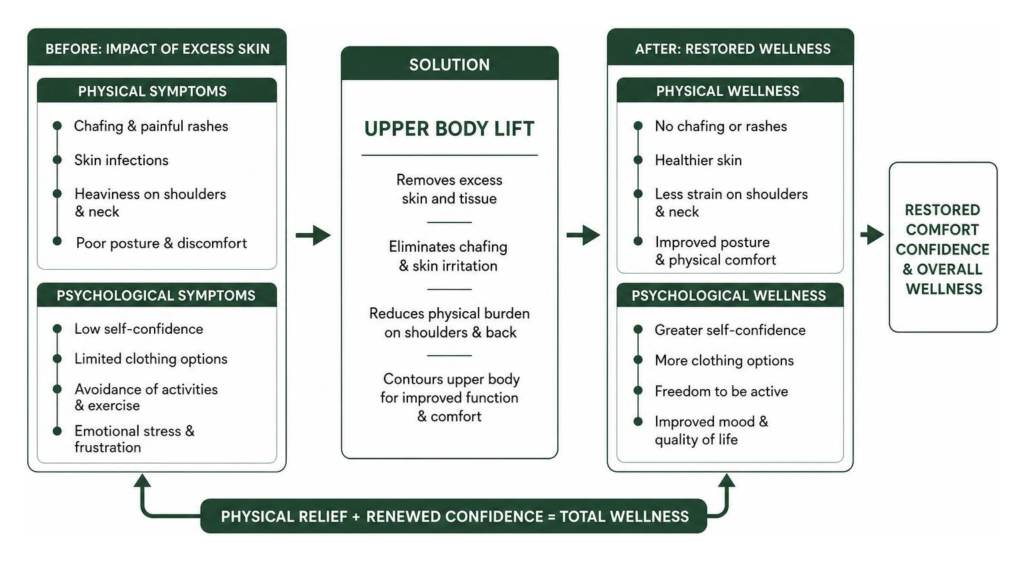
An upper body lift directly addresses these issues by treating the upper torso as a cohesive, single aesthetic unit. Rather than performing isolated surgeries that can leave adjacent areas looking unbalanced, this procedure restores anatomical harmony from the neck down to the mid-back. By removing the physical burden of redundant skin and eliminating painful chafing, an upper body lift allows patients to fully embrace an active, healthy lifestyle, restoring both physical comfort and a renewed sense of personal vitality.
What Specific Procedures Are Included in an Upper Body Lift?
Because every individual’s anatomy and weight loss journey are unique, there is no single, standardized upper body lift. Instead, a board-certified plastic surgeon designs a customized surgical plan tailored to your specific goals and anatomical needs.
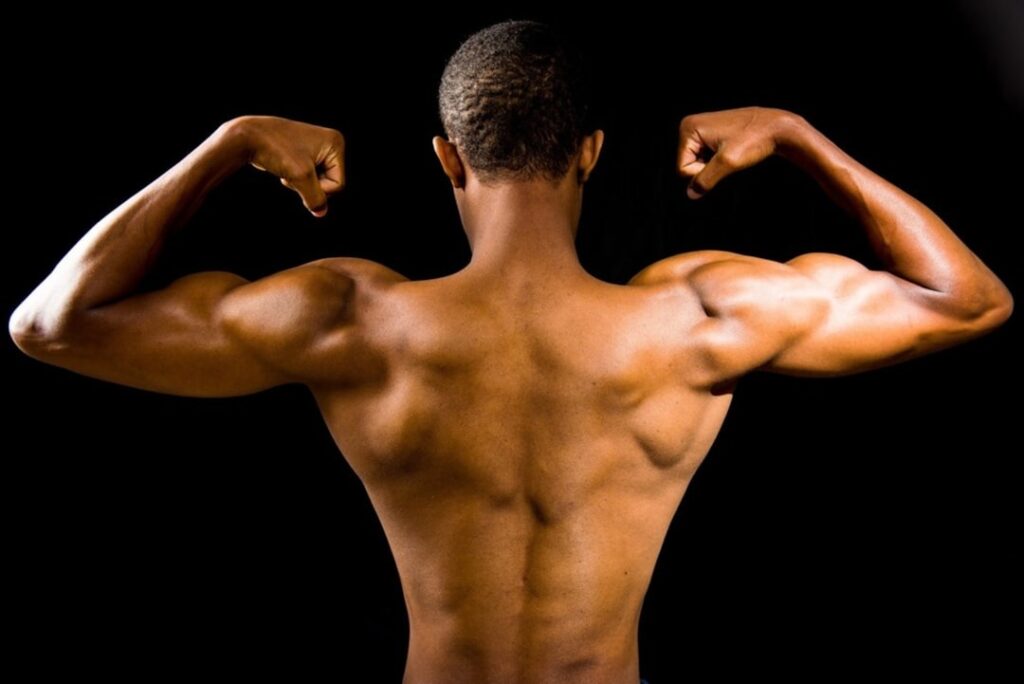
Treating the upper trunk as a unified zone ensures that the transitions between your arms, chest, and back are smooth, balanced, and completely natural-looking. Combining these procedures into a single surgical session under general anesthesia minimizes overall downtime and ensures a harmonious aesthetic outcome.
Brachioplasty (Arm Lift)
Massive weight loss and aging frequently leave behind loose, hanging skin on the underside of the upper arms, often referred to as a “batwing” appearance. A brachioplasty, or arm lift, is designed to remove this excess skin and targeted fat to restore a toned, defined arm contour.
Depending on the severity of your skin laxity, your surgeon will recommend one of three primary incision techniques:
- Limited Incision Brachioplasty: Ideal for patients with mild skin laxity concentrated near the armpit. The incision is tucked entirely within the underarm crease, making it highly discreet.
- Standard Brachioplasty: Best suited for moderate to severe skin laxity. The incision runs along the inner arm from the armpit down to the elbow, allowing the surgeon to remove a significant amount of loose tissue and sculpt a slender arm profile.
- Extended Brachioplasty: Frequently required for massive weight loss patients. The incision extends from the elbow, through the armpit, and down onto the lateral chest wall to address redundant skin folds that spill over onto the sides of the chest.
Mastopexy (Breast Lift) or Male Chest Reconstruction
For female patients, significant weight fluctuations and aging can cause the breasts to lose volume and sag, a condition known as ptosis. A mastopexy, or breast lift, removes excess skin, tightens the surrounding tissue, and elevates the breast to a more youthful, upright position. During this process, the nipple-areola complex is carefully repositioned. This is crucial because massive weight loss often causes the nipples to migrate downward and outward, creating a “cross-eyed” or deflated appearance.
For male patients who have experienced massive weight loss or suffer from gynecomastia (excess male breast tissue), male chest reconstruction is utilized. This procedure flattens and tightens the male chest, removing sagging skin and glandular tissue to create a firm, masculine chest contour.
Importantly, both female and male chest procedures are coordinated with the treatment of the lateral chest wall. This ensures that any tissue rolls extending from the sides of the chest toward the back are seamlessly smoothed out.
Upper Back Lift and Bra Strap Excision
The back is an area where excess skin and stubborn fat rolls frequently accumulate, often presenting as prominent folds along the mid-to-upper back. In women, this excess tissue is highly visible when wearing a bra or swimwear, often referred to as an “inverted-V” deformity or “bra rolls.”
An upper back lift, also known as a bra strap excision, targets this specific region. The surgeon makes a horizontal incision across the upper back, precisely where it can be hidden beneath a bra strap, bikini top, or athletic wear. Through this incision, the loose skin and underlying fat rolls are excised, and the remaining tissue is pulled taut. This flattens and smooths the entire upper and mid-back, allowing clothing to fit comfortably and restoring a sleek, youthful silhouette.
Who Is the Ideal Candidate for This Transformative Procedure?
An upper body lift is a major surgical undertaking that requires careful preparation and realistic expectations. Determining whether you are ready for this procedure involves assessing several key physical and lifestyle factors.
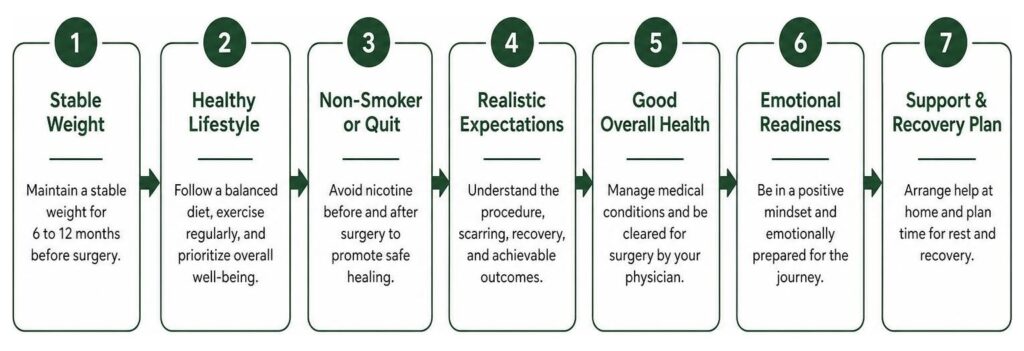
To help you evaluate your readiness, consider the following criteria:
Candidate Readiness Criteria Why It Matters for Your Safety and Results Stable Weight for 6 to 12 MonthsSignificant weight fluctuations after surgery can stretch out your results or create new pockets of loose skin, compromising the surgical outcome. At Least 2 Years Post-Massive Weight LossWaiting two years allows your body’s nutritional status to stabilize and gives your skin tissues time to settle, ensuring safer healing and more predictable results. Good Overall Physical Health Candidates must not have uncontrolled medical conditions, such as active cardiovascular disease, lung disease, or poorly managed diabetes, which increase surgical risks. Non-Smoking StatusNicotine constricts blood vessels, severely compromising blood flow to healing tissues. You must commit to quitting all nicotine products at least 4 to 6 weeks before and after surgery. Completed Family Planning Future pregnancies will stretch the skin and abdominal tissues, which can reverse the contouring achievements of your upper body lift. Stable Mental and Emotional Health Post-operative recovery is a physical and emotional journey. Candidates should have a positive outlook, a strong support system, and realistic expectations. What Should Patients Expect During Recovery and Healing?
Because an upper body lift addresses multiple areas of the upper torso, the recovery process requires patience, preparation, and strict adherence to your surgeon’s post-operative instructions.
Immediately following surgery, which typically takes four or more hours under general anesthesia, patients are monitored closely. Due to the extensive nature of combining an arm lift, breast lift, and back lift, it is highly recommended to arrange for 1 to 3 days of professional nursing care or dedicated assistance from a trusted adult at home.
During the initial recovery phase, you will wake up wearing specialized compression garments. These medical-grade garments are essential for minimizing swelling, supporting your newly contoured tissues, and helping your skin adhere to its new underlying structures. You will also have temporary surgical drains placed beneath the incisions to prevent fluid buildup (seromas). Your surgical team will teach you how to measure and empty these drains daily until they are ready to be safely removed in the office, typically within 1 to 2 weeks.
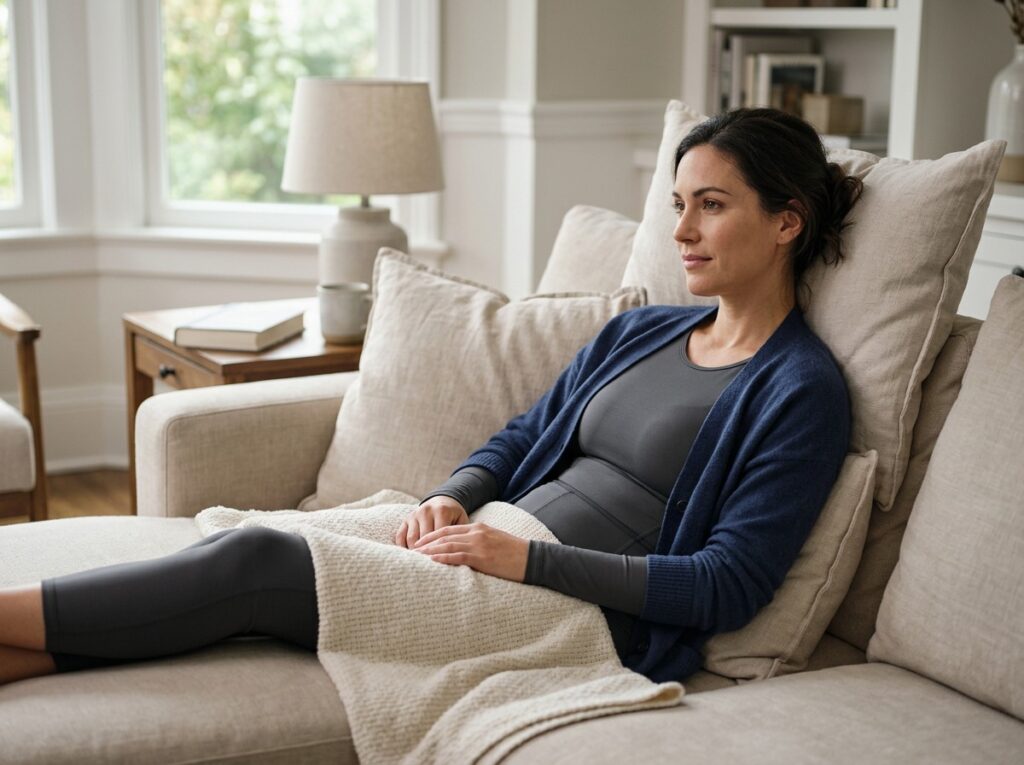
The general timeline for returning to daily life unfolds gradually:
- Weeks 1 to 2: Focus entirely on rest and gentle, short walks around the house to promote healthy blood circulation. Avoid any lifting, reaching overhead, or pushing yourself up using your arms.
- Weeks 2 to 3: Most patients feel comfortable returning to light daily activities and desk-based work, provided they are no longer taking prescription pain medications.
- Weeks 4 to 6: Swelling and bruising will continue to subside. Under your surgeon’s guidance, you can gradually resume light exercise, but you must avoid heavy lifting or strenuous upper-body workouts.
- Months 6 to 12: Your incisions will undergo a natural maturation process. While scars are an inevitable part of any surgical skin removal, they will gradually fade from red or pink to thin, flat, skin-colored lines.
To optimize your long-term scar healing, your surgeon will recommend a customized scar management protocol. This typically begins once your incisions have fully closed and may include the daily application of medical-grade silicone gel or silicone sheeting, gentle scar massage to break up fibrotic tissue, and strict sun protection. Exposing healing scars to UV rays can cause permanent hyperpigmentation, making them appear darker, so applying a broad-spectrum sunscreen daily is essential.
How The Waltzman Institute Achieves Natural, Harmonious Results
At The Waltzman Institute in Long Beach, CA, Dr. Josh Waltzman and his expert team believe that plastic surgery should never look “done.” Instead, the goal of an upper body lift is to restore your body to its natural, proportional state, allowing your inner vitality to shine through. Serving patients throughout Los Angeles County, Orange County, and the wider Southern California region, Dr. Waltzman is highly regarded for his meticulous attention to detail and his commitment to patient safety.
Dr. Waltzman treats the upper torso as a single, interconnected canvas. By avoiding a one-size-fits-all approach, he customizes every incision and tissue repositioning technique to match your unique skeletal structure and natural muscle contours. This personalized planning prevents an over-pulled, artificial appearance and ensures that your arms, chest, and back look balanced and athletic.
Furthermore, The Waltzman Institute stays at the forefront of advanced surgical techniques and post-operative recovery protocols. By utilizing precise surgical planning, tissue-gluing techniques, and advanced pain management strategies, Dr. Waltzman helps minimize tissue trauma, resulting in cleaner scars and a more comfortable, accelerated recovery process. From your initial consultation in Long Beach to your final follow-up visit, your safety, wellness, and aesthetic goals are supported at every step.
Frequently Asked Questions About Upper Body Lifts
Can an upper body lift be combined with a lower body lift?
While it is anatomically possible to address both the upper and lower body, combining an upper body lift with a lower body lift (which targets the abdomen, hips, and buttocks) into a single surgical session is generally not recommended. Doing so significantly increases anesthesia time, elevates the risk of wound-healing complications, and makes the recovery process exceptionally challenging for the patient.
Instead, Dr. Waltzman typically recommends staging these procedures. Performing the lower body lift first, allowing the body to fully heal for several months, and then performing the upper body lift is a much safer approach. Staging ensures optimal blood flow to healing tissues, reduces surgical risks, and ultimately leads to a more comfortable recovery and superior aesthetic results.
Will liposuction alone deliver the same results as an upper body lift?
No, liposuction and an upper body lift serve entirely different purposes. Liposuction is a highly effective tool for removing localized pockets of stubborn fat, but it relies on the patient having excellent skin elasticity to contract over the new, slimmer contour.
If you have loose, sagging, or redundant skin folds after massive weight loss or aging, liposuction alone will actually worsen the appearance of the skin, leaving it looking deflated and wrinkly. An upper body lift is required to physically excise the excess skin and tighten the underlying tissue. However, Dr. Waltzman frequently uses liposuction as an adjunctive tool during an upper body lift to feather and sculpt the edges of the treated areas, ensuring a seamless and beautifully contoured transition.
How long do the results of an upper body lift last?
The results of an upper body lift are considered long-lasting, and in many ways, permanent. The skin and tissue that are surgically removed cannot grow back. However, your body will continue to age naturally, and your skin will gradually lose some elasticity over time.
To preserve your beautifully sculpted results for decades to come, it is essential to maintain a stable weight. Significant weight gain will stretch out the remaining skin, while subsequent weight loss can create new areas of laxity. Committing to a balanced diet, staying well-hydrated, protecting your skin from sun damage, and engaging in regular strength training to support muscle tone are the best ways to protect your investment in yourself.
Conclusion
An upper body lift is a deeply transformative procedure that goes far beyond cosmetic improvement. By addressing the arms, chest, and back as a single, harmonious unit, this surgery frees you from the physical discomfort of redundant skin and restores a balanced, natural-looking silhouette that reflects your hard work and dedication.
When considering a procedure of this magnitude, choosing a Board-Certified plastic surgery wellness provider who prioritizes natural proportions and patient safety is paramount. If you are ready to take the next step in your wellness journey and live in the Long Beach, Los Angeles, or Orange County areas, we encourage you to schedule a personalized consultation at The Waltzman Institute. Dr. Waltzman will work closely with you to design a tailored surgical plan that restores your physical comfort, enhances your natural contours, and elevates your self-confidence.