


The Endocrine-Gut Connection: How Hypothyroidism Halts Digestion
The intricate relationship between our endocrine system and our digestive health is often underestimated. At the heart of this connection are thyroid hormones, which act as master regulators of metabolism throughout the body, including the gastrointestinal (GI) tract. When the thyroid gland doesn’t produce enough of these vital hormones, the entire system slows down, and the gut is no exception.
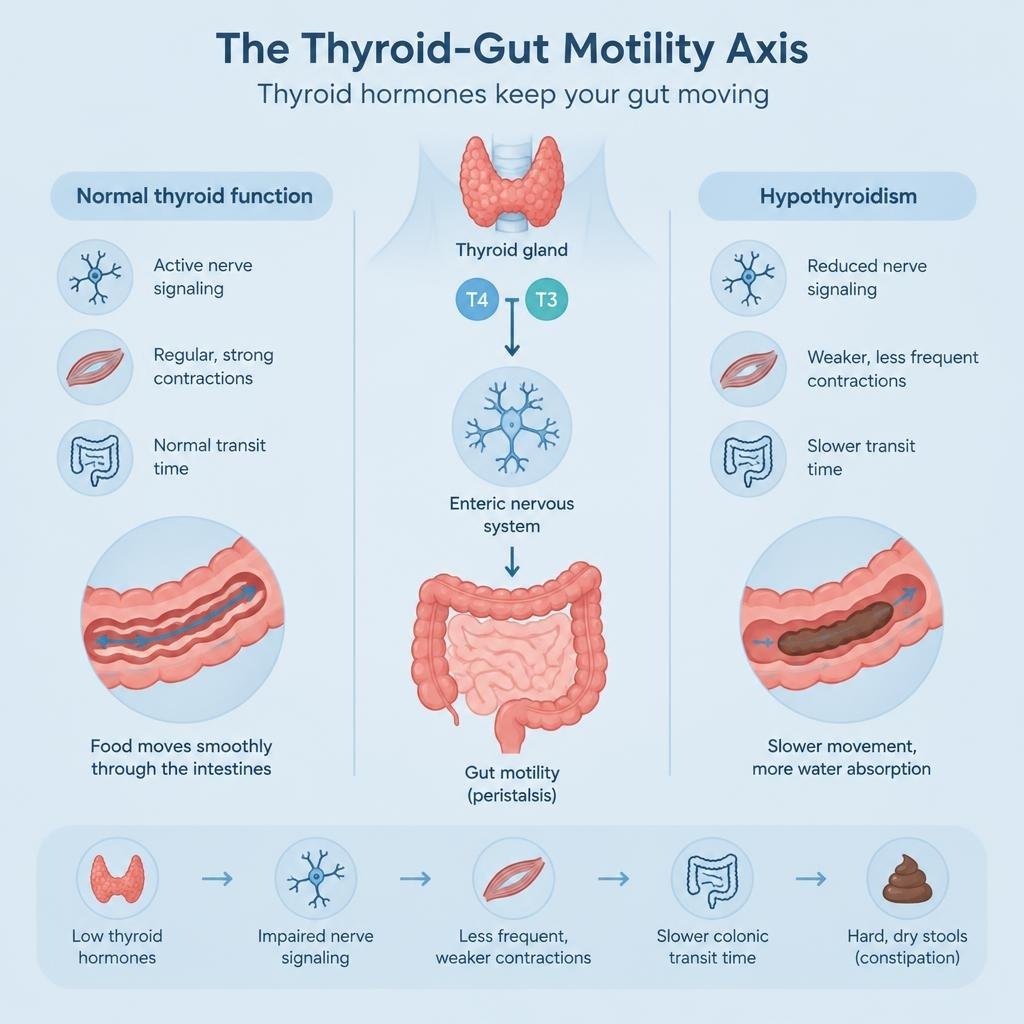
Thyroid hormones directly influence the enteric nervous system, the complex network of neurons embedded in the walls of the GI tract that controls digestive processes. They regulate the strength and frequency of smooth muscle contractions, which are essential for propelling food through the intestines—a process known as peristalsis. When thyroid hormone levels are low, this entire machinery operates in slow motion. This leads to reduced gastrointestinal transit time, decreased smooth muscle tone, and consequently, increased water absorption in the colon, resulting in the hard, dry stools characteristic of constipation.
Thyroid Hormone Deficiency and Peristalsis
The primary thyroid hormones, thyroxine (T4) and triiodothyronine (T3), are crucial for maintaining normal gut function. T3, the active form, influences cellular energy production and nerve signaling. In a state of hypothyroidism, the diminished levels of these hormones impair the neuromuscular signaling within the gut. This means the colon’s muscles contract less frequently and with less force, significantly slowing colonic transit time.
As stool spends more time in the colon, more water is reabsorbed by the body, leading to stool desiccation—making the stool harder and more difficult to pass. This direct impact on muscle contraction and nerve impulses is a primary reason why hypothyroidism so profoundly affects bowel regularity. Clinical studies show that the transit time in the esophagus can be more than twice as long in hypothyroid patients compared to healthy individuals, and gastric emptying can also be significantly delayed. This systemic slowdown contributes to a feeling of sluggishness beyond just bowel movements.
Central Thyroid Hormone Resistance and Metabolic Slowdown
Beyond overt hypothyroidism, a more subtle yet significant factor contributing to constipation is central thyroid hormone resistance. This occurs when the body’s cells do not respond effectively to thyroid hormones, even if blood levels appear to be within the normal range. Research published in October 2026 suggests that thyroid hormone resistance may be an under-recognized contributor to chronic constipation.
A large-scale analysis using NHANES data revealed a strong association between central thyroid hormone resistance and the prevalence of constipation, independent of traditional risk factors. Researchers observed lower levels of key thyroid indices—including TSH, free T4, free T3, and various thyroid hormone resistance indices (TSHI, TFQIFT3, and TFQIFT4)—in individuals experiencing constipation. This indicates that even subtle inefficiencies in how the body utilizes thyroid hormones can impact bowel function.
This resistance translates to a metabolic slowdown at the cellular level, affecting mitochondrial ATP production—the energy currency of our cells. If gut cells lack sufficient energy, their ability to contract and coordinate peristalsis is compromised. Interestingly, the study also noted a non-linear relationship between certain resistance indices and constipation, particularly in women, suggesting complex interplay of factors. This highlights that simply having “normal” TSH levels might not be enough to rule out a thyroid-related cause for persistent constipation.
Secondary Gastrointestinal Complications: SIBO and Low Stomach Acid
The impact of hypothyroidism on digestion extends beyond just slowing motility. Low thyroid hormone levels can also lead to hypochlorhydria, a condition characterized by insufficient stomach acid production. Adequate stomach acid is vital for breaking down food, absorbing nutrients, and acting as a barrier against harmful bacteria entering the small intestine.
When stomach acid is low, the risk of dysbiosis—an imbalance in gut bacteria—and Small Intestinal Bacterial Overgrowth (SIBO) increases significantly. Hypothyroidism can further exacerbate SIBO by impairing the Migrating Motor Complex (MMC), a “housekeeping wave” of electrical activity that sweeps bacteria and undigested food particles from the small intestine into the large intestine between meals. A sluggish MMC allows bacteria to stagnate and overgrow in the small intestine, leading to symptoms like bloating, gas, abdominal pain, and, crucially, constipation (or sometimes alternating diarrhea and constipation) due to bacterial fermentation and nutrient malabsorption.

Addressing these secondary complications is often a critical step in resolving constipation for hypothyroid patients.
Identifying High-Risk Demographics and Clinical Knowledge Gaps
Understanding who is most susceptible to hypothyroidism-related constipation and where patient education falls short is crucial for improving care. Epidemiology points to specific demographics, while ongoing research highlights persistent gaps in health literacy regarding this common complication.
Affected Subgroups: Gender, Age, and Metabolic Index
Certain groups are disproportionately affected by thyroid disorders and, by extension, thyroid-related constipation. Women, for instance, are eight times more likely than men to develop a thyroid disorder. This higher prevalence means they are also more likely to experience constipation as a symptom of an underactive thyroid. Hormonal fluctuations throughout a woman’s life, such as during pregnancy or menopause, can further complicate thyroid function and bowel regularity.
Age is another significant factor. Hypothyroidism prevalence tends to be higher among older adults, and studies indicate that older age is significantly correlated with higher constipation frequency in hypothyroid patients. Similarly, the duration of the thyroid disease also plays a role; longer disease duration has been strongly linked to more frequent constipation.
Metabolic factors, such as Body Mass Index (BMI), also influence the severity of thyroid-related constipation. Research indicates that a higher BMI (specifically, a BMI of 30 or greater) can amplify the odds ratios for several thyroid hormone resistance indices, suggesting that obesity may worsen the impact of thyroid dysfunction on bowel health.
While hypothyroidism is a known cause of constipation, it’s important to note that in pediatric populations, isolated constipation is rarely due to an underactive thyroid. A five-year review of thyroid tests in a pediatric gastroenterology office, published in October 2026, found that only a tiny fraction (0.2%) of children with isolated constipation were newly diagnosed with hypothyroidism. This suggests that routine thyroid screening for constipation in otherwise healthy children may not be justified unless other clinical indicators, such as growth failure or genetic syndromes, are present.
Addressing the Communication Deficit in Endocrine Care
Despite the strong link between hypothyroidism and constipation, a significant knowledge gap persists among patients. Recent studies reveal that while 62.7% of participants with hypothyroidism were aware of this connection, a substantial 37.3% remained unaware of this common complication. Even more striking, 88.3% of participants expressed a need for more information or support in managing constipation related to their thyroid condition.
This “communication deficit” can lead to diagnostic delays and prolonged suffering. Patients might attribute their constipation solely to diet or stress, not realizing it’s a symptom that could improve with optimized thyroid management. Healthcare providers, particularly nurses and primary care clinicians, have a crucial role in bridging this gap. Integrating routine bowel health education into hypothyroidism care plans and providing patient-centered counseling can significantly improve self-management and overall health outcomes. Tools like the Bowel Habits Questionnaire can also help patients and providers track symptoms more effectively and identify patterns.
Specialized Care for Hypothyroid Constipation: Medical and Lifestyle Approaches
Effectively managing constipation in hypothyroid patients requires a multimodal approach that goes beyond generic advice. The primary goal is to achieve endocrine balance, which then supports gut rehabilitation and improved stool consistency. This often involves a combination of thyroid medication optimization, targeted pharmacological interventions, and specific nutritional and lifestyle strategies.
Thyroid Medication Optimization as Specialized Care for Hypothyroid Constipation
For individuals with hypothyroidism, optimizing thyroid hormone treatment is often the most critical first step in addressing constipation. The standard treatment involves daily levothyroxine, a synthetic T4 hormone. However, simply taking the medication isn’t always enough; proper dosing and timing are paramount for effective absorption and action.
Levothyroxine should be taken first thing in the morning on an empty stomach, typically 30-60 minutes before food or beverages (other than water). It’s also crucial to separate levothyroxine intake from other medications and supplements, especially calcium, iron, and high-fiber supplements, by at least four hours, as these can interfere with its absorption. Even with seemingly “normal” TSH levels, some patients may still experience constipation if their Free T3 levels are not optimal, or if they have issues with T4 to T3 conversion. Regular monitoring of TSH, Free T4, and Free T3 is essential to ensure therapeutic efficacy and to fine-tune the dosage. For those seeking comprehensive evaluation and personalized treatment plans, specialized care for hypothyroid constipation can provide tailored solutions.
Specialized care for hypothyroid constipation

Pharmacological Interventions and Secretagogues
When thyroid optimization and lifestyle changes aren’t sufficient, pharmacological interventions may be necessary. These should always be discussed with a healthcare provider to ensure they are appropriate for hypothyroid patients and don’t interact adversely with thyroid medication.
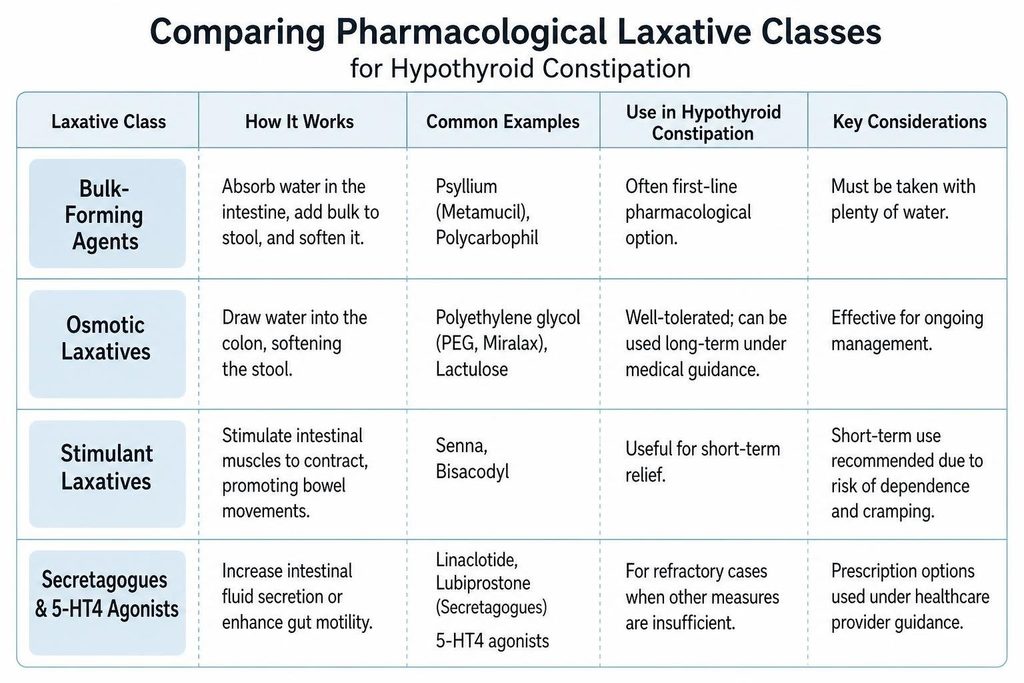
- Bulk-forming agents: These are often the first-line pharmacological treatment. Products like psyllium (Metamucil) or polycarbophil absorb water in the intestine, adding bulk to the stool and making it softer and easier to pass. They must be taken with plenty of water.
- Osmotic laxatives: These work by drawing water into the colon, softening the stool. Common examples include polyethylene glycol (PEG, like Miralax) and lactulose. They are generally well-tolerated and can be used long-term under medical guidance.
- Stimulant laxatives: Medications like senna or bisacodyl stimulate the muscles of the intestines to contract. These are typically recommended for short-term use due to the risk of dependence and potential for cramping.
- Secretagogues: For refractory cases, newer prescription medications called secretagogues (e.g., linaclotide, lubiprostone) or 5-HT4 agonists can be used. These work by increasing fluid secretion into the intestine or enhancing gut motility, respectively.
Targeted Nutrition and Hydration Strategies in Specialized Care for Hypothyroid Constipation
Diet and hydration are foundational to managing constipation, especially for hypothyroid patients. However, the approach needs to be strategic.
- Fiber Intake: Aim for 25-31 grams of fiber daily, a blend of soluble and insoluble types. Soluble fiber (found in oats, beans, apples) helps soften stool, while insoluble fiber (found in whole grains, vegetables, nuts) adds bulk. Introduce fiber gradually to avoid bloating and gas. Fiber supplements should be taken several hours apart from thyroid medication.
- Daily Fluid: Adequate hydration is paramount. Studies show that drinking 1.5–2 liters (approximately 6-8 glasses or 64 ounces) of water daily is perceived as highly effective by hypothyroid patients in managing constipation. This helps keep stools soft and aids fiber in its bulking action.
- Electrolyte Support: Sometimes, just water isn’t enough. Adding electrolytes like magnesium and potassium, or a pinch of sea salt to morning water, can further support bowel function, especially if there’s a concern about dehydration or nutrient deficiencies.
- Healthy Fats: Incorporating high-quality fats (like olive oil, avocado, nuts) can help lubricate the gut and support healthy bile flow, which is important for digestion and bowel motility.
- Physical Activity: Regular moderate exercise, such as a 30-minute brisk walk most days of the week, stimulates gut motility and can significantly improve constipation. Even gentle movement helps.
- Pelvic Floor Therapy: For some, pelvic floor dysfunction can contribute to constipation. Specific exercises or therapy can help retrain these muscles for more effective bowel movements.

Clinical Red Flags: When to Seek Advanced Medical Evaluation
While many cases of hypothyroidism-related constipation can be managed with optimized thyroid treatment and lifestyle adjustments, there are critical warning signs that necessitate immediate and advanced medical evaluation. Ignoring these “red flags” can delay the diagnosis of more serious underlying conditions.
You should seek prompt medical attention if you experience:
- Rectal bleeding or blood in the stool: This should never be ignored, as it can indicate conditions ranging from hemorrhoids to more serious issues like inflammatory bowel disease or colorectal cancer.
- Unexplained weight loss: Significant, unintentional weight loss accompanying constipation warrants a thorough investigation.
- Severe or persistent abdominal pain: While some discomfort is common with constipation, severe or worsening pain could signal an obstruction or other acute abdominal issue.
- Vomiting or persistent nausea:These symptoms, especially when combined with constipation, could indicate a bowel obstruction.
- New-onset constipation in older adults: Constipation appearing for the first time in individuals over 50 should always be medically evaluated to rule out serious conditions.
- Constipation that persists despite comprehensive lifestyle changes and optimized thyroid treatment: If your symptoms do not improve after consistent efforts, further diagnostic evaluation is needed.
A comprehensive constipation evaluation may involve more than just blood tests. Your healthcare provider might recommend stool tests, imaging studies (like X-rays or CT scans), a colonoscopy to visualize the large intestine, or specialized tests such as anorectal manometry (to assess pelvic floor function) or a transit study (to measure how quickly food moves through the digestive tract). These evaluations help distinguish between functional constipation and constipation caused by structural issues, neurological problems, or other metabolic abnormalities.
Frequently Asked Questions About Hypothyroidism and Constipation
We often encounter common questions from patients navigating the complexities of hypothyroidism and its impact on bowel health. Here, we address some of the most frequent concerns.
Why does constipation persist despite normal TSH levels?
This is a common and frustrating scenario. While TSH (Thyroid-Stimulating Hormone) is the primary marker for thyroid function, “normal” TSH doesn’t always equate to optimal thyroid hormone action at the cellular level. Several factors can contribute to persistent constipation even with TSH in the normal range:
- Thyroid Hormone Resistance: As discussed earlier, your cells might not be responding efficiently to thyroid hormones, even if levels appear adequate in the blood. This can be indicated by other thyroid indices like TSHI or TFQIFT3.
- Suboptimal Free T3 Levels: Free T3 is the active thyroid hormone that directly influences metabolism. If your body isn’t converting T4 to T3 effectively, or if your T3 levels are on the lower end of the normal range, you might still experience hypothyroid symptoms like constipation.
- Concurrent SIBO or Dysbiosis:Hypothyroidism predisposes individuals to SIBO and imbalances in gut flora, which can independently cause constipation. Addressing these gut issues is crucial.
- Nutrient Deficiencies: Deficiencies in magnesium, vitamin C, or other nutrients can contribute to constipation regardless of thyroid status.
- Medication/Supplement Interference: As mentioned, certain medications or supplements can hinder thyroid hormone absorption or directly cause constipation.
How do fiber supplements interfere with thyroid medication?
Fiber, particularly insoluble fiber, can bind to levothyroxine in the digestive tract. This binding prevents the thyroid hormone from being properly absorbed into the bloodstream, effectively reducing the medication’s effectiveness. This “chelation” means that even if you’re taking your prescribed dose, your body isn’t receiving the full amount of hormone it needs.
To avoid this interaction, it’s generally recommended to take your levothyroxine on an empty stomach and separate it from fiber-rich foods or fiber supplements (like psyllium husk) by at least a four-hour window. This ensures that the medication has ample time to be absorbed before fiber is introduced.
What are the earliest signs that constipation is thyroid-related?
While constipation can have many causes, when it’s linked to an underactive thyroid, it often appears alongside other subtle (or not-so-subtle) symptoms that signal a systemic slowdown. These can include:
- Chronic Fatigue: A pervasive, unexplained tiredness that doesn’t improve with rest.
- Increased Sensitivity to Cold:Feeling cold even in comfortable temperatures, or having cold hands and feet.
- Unexplained Weight Gain: Gaining weight despite no significant changes in diet or activity.
- Dry Skin and Hair Changes: Dry, rough skin, brittle nails, and hair thinning or loss.
- Brain Fog: Difficulty concentrating, memory issues, or a general mental sluggishness.
- General Sluggishness: A feeling that everything, including your body and mind, is operating at a slower pace.
Constipation can sometimes be an early indicator of hypothyroidism, even before other symptoms become prominent. If you experience persistent constipation along with any of these other signs, it’s a strong signal to discuss comprehensive thyroid testing with your healthcare provider.
Conclusion
Constipation is far more than just an inconvenient digestive issue for individuals with hypothyroidism; it’s a direct reflection of a systemic metabolic slowdown. We’ve seen how low thyroid hormone levels, and even subtle thyroid hormone resistance, can profoundly impact gastrointestinal motility, leading to frustrating and persistent bowel problems.
Moving beyond simple dietary fixes, effective management hinges on hormonal optimization, ensuring not just “normal” but optimal thyroid function. This comprehensive approach integrates precise thyroid medication management, including careful timing and monitoring of TSH and Free T3. It also encompasses targeted pharmacological interventions when necessary, alongside strategic nutritional and lifestyle adjustments—such as adequate fiber, hydration, and regular physical activity.
Recognizing the specific demographics at higher risk and addressing the existing knowledge gaps are crucial steps toward better patient care. By understanding the intricate link between the thyroid and the gut, and knowing when to seek advanced medical evaluation for red-flag symptoms, we can empower ourselves and others to achieve sustainable relief and improve overall quality of life. The journey to better bowel health for hypothyroid patients is a holistic one, rooted in informed choices and collaborative care.
- Hypothyroidism and Constipation: Understanding the Thyroid–Gut Connection
- Staying Active With Adult Scoliosis in Denver, Colorado: Daily Habits, Exercise, and Care Choices
- 6 Resources That Can Support An Ohio Federal Drug Conspiracy Defense Strategy
- Medical Misdiagnosis And Your Legal Rights
- Finding Tranquility: The Benefits of Day Spa Treatments and Massage Therapy