


Immediate Crisis Support and Emergency Lifelines
When mental health distress strikes, immediate access to support can be life-saving. Crisis intervention services are designed to provide rapid, confidential assistance 24/7, offering a crucial first step toward stability and safety. These services often employ triage protocols to assess the severity of a situation and connect individuals with the most appropriate level of care, sometimes involving public safety resources when there’s an imminent threat. Understanding the landscape of these lifelines is paramount for anyone facing an acute mental health challenge or supporting someone who is.
24/7 Lifelines, Mobile Crisis Units, and 988 vs. 911 Protocols
The landscape of immediate mental health support has evolved significantly to provide more targeted and compassionate responses. At the forefront is the 988 Suicide & Crisis Lifeline, a nationwide, free, and confidential service available 24/7 via call, text, or chat. When you contact 988, you’re connected with trained crisis counselors who can provide support, de-escalation, and connect you to local resources. Calls are routed based on area code, ensuring localized assistance. Similarly, the Crisis Text Line (text HOME to 741741) offers immediate support through text message, which can be a preferred method for many, especially youth.
Beyond phone and text lines, many communities are expanding their crisis response with mobile crisis units. These teams, often comprised of mental health professionals, can be dispatched to an individual’s location to provide on-site assessment, de-escalation, and connection to services, aiming to prevent unnecessary emergency room visits or law enforcement involvement.
It’s vital to understand the distinction between 988 and 911. While both are emergency numbers, they serve different primary functions. 911 is for life-threatening emergencies requiring immediate police, fire, or medical intervention. If there’s an active threat of violence, severe injury, or immediate danger to self or others that requires physical intervention, 911 is the appropriate number. 988, on the other hand, is specifically designed for mental health crises, including suicidal ideation, substance use crises, and any other emotional distress. It aims to provide a mental health-first response, focusing on de-escalation and support rather than law enforcement intervention, unless safety dictates otherwise. In some areas, 988 can dispatch mobile crisis units, offering a specialized, non-police response.
Specialized Crisis Networks for Veterans, Youth, and Maternal Care
Recognizing that certain populations face unique mental health challenges, specialized crisis networks have been established to offer tailored support.
For veterans and active-duty military personnel, the Veterans Crisis Lineprovides confidential support. Veterans can connect by dialing 988 and pressing 1, or by texting 838255. This service ensures that those who have served our country receive care from individuals trained to understand their specific experiences, offering peer support and pathways to VA mental health resources.
Maternal mental health is another critical area. Pregnancy and the postpartum period can bring significant emotional changes, and specialized support is available for new and expectant mothers. The National Maternal Mental Health Hotline (1-833-TLC-MAMA) offers 24/7 confidential support, connecting individuals with professional counselors who can provide emotional support, resources, and referrals for conditions like postpartum depression and anxiety.
For youth and families, resources like The Trevor Project (1-866-488-7386 or text START to 678-678) offer crisis intervention and suicide prevention services specifically for LGBTQ young people. Many local communities also have youth programs and peer lifelines designed to support young people through their unique struggles, often emphasizing cultural competency and age-appropriate interventions. These specialized networks ensure that individuals receive support that is not only immediate but also deeply understanding of their specific life circumstances and cultural backgrounds.
Understanding Mental Health Resources and Therapy Modalities
Navigating mental health support involves understanding the various clinical modalities, therapeutic levels, and psychotherapy formats available. The goal is always to find the most effective approach for an individual’s unique needs, focusing on clinical efficacy and well-coordinated care. Whether you’re exploring options for yourself or a loved one, familiarizing yourself with these distinctions is a powerful step.
Selecting Evidence-Based Mental Health Resources and Therapy Approaches
The field of psychotherapy offers a diverse range of approaches, each with its own theoretical framework and techniques. When seeking support, it’s beneficial to look for evidence-based mental-health therapy, which refers to treatments that have been scientifically proven to be effective for specific conditions through rigorous research. This ensures that the care you receive is grounded in what works.
Some of the most common and effective modalities include:
- Cognitive Behavioral Therapy (CBT):This widely used therapy helps individuals identify and change negative thought patterns and behaviors that contribute to emotional difficulties. It’s highly effective for conditions like depression, anxiety disorders, and PTSD.
- Dialectical Behavior Therapy (DBT):A specialized form of CBT, DBT focuses on teaching skills in four key areas: mindfulness, distress tolerance, emotion regulation, and interpersonal effectiveness. It’s particularly effective for individuals struggling with intense emotions, self-harm, and relationship difficulties, often associated with Borderline Personality Disorder.
- Eye Movement Desensitization and Reprocessing (EMDR): This therapy is specifically designed to help individuals process traumatic memories and reduce their emotional impact. It involves guided eye movements or other bilateral stimulation while recalling distressing events.
- Somatic Therapy: This approach focuses on the connection between the mind and body, using body-centered techniques to release trauma and emotional stress held in the physical self. Techniques may include breathwork, movement, and sensation awareness.
Other therapies, such as psychodynamic therapy, humanistic therapy, and family systems therapy, also offer valuable pathways to healing. The choice often depends on the individual’s specific challenges, preferences, and the therapist’s expertise. Discussing these options with a qualified professional can help determine the most suitable clinical outcomes for your journey.
Comparing In-Person Sessions, Virtual Care, and Digital Telehealth Platforms
The delivery of mental health services has expanded significantly, offering more flexibility and accessibility than ever before. We can now choose between traditional in-person sessions, virtual care, and hybrid models. Each has its own set of advantages and considerations.
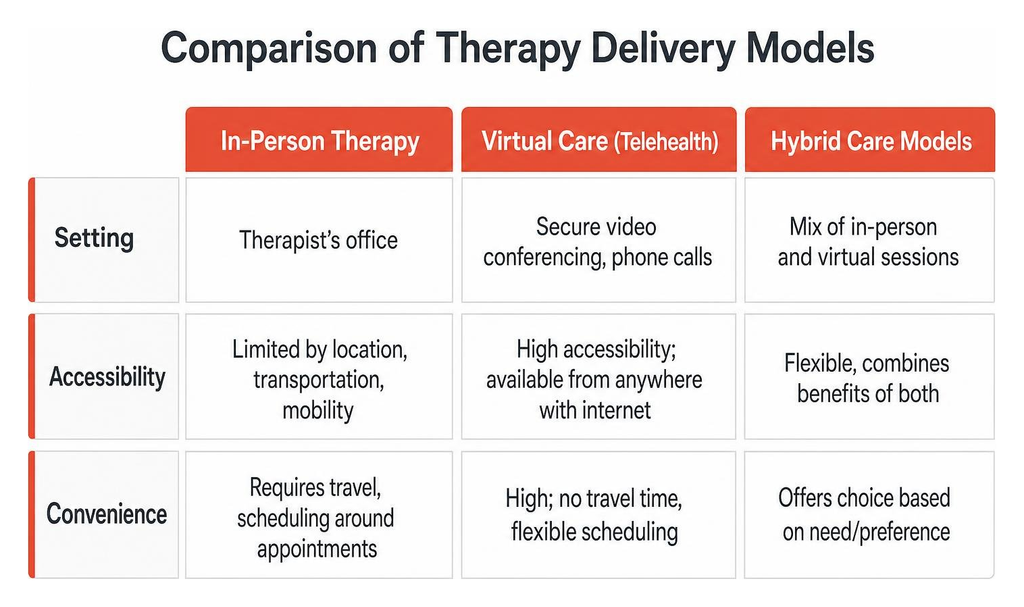
Feature In-Person Therapy Virtual Care (Telehealth) Hybrid Care Models SettingTherapist’s office Secure video conferencing, phone calls Mix of in-person and virtual sessions Accessibility Limited by location, transportation, mobility High accessibility; available from anywhere with internet Flexible, combines benefits of both Convenience Requires travel, scheduling around appointments High; no travel time, flexible scheduling Offers choice based on need/preference Privacy Controlled office environment Requires secure, private space at home/work Varies by session type Therapeutic Nuance Full non-verbal cues (body language, presence) Some non-verbal cues may be missed Blends full and partial non-verbal observation HIPAA Compliance Standard Requires secure, encrypted platforms Standard for both in-person and virtual components Clinical Limitations May be difficult for those with mobility issues Not suitable for severe crises or certain complex cases Offers adaptability for varying clinical needs CostVaries; may include travel costs Often comparable to in-person; may save on travel Varies by provider and session type In-person sessions offer the unique benefit of direct human connection, allowing for the observation of subtle non-verbal cues and creating a dedicated space away from daily distractions. This can be particularly beneficial for certain therapeutic approaches or for individuals who prefer face-to-face interaction.
Virtual care, or telehealth, delivered through video counseling platforms, has revolutionized access to mental health support. It provides unparalleled convenience and flexibility, allowing individuals to attend sessions from the comfort of their home or office. This digital access has been particularly impactful for those in rural areas, individuals with mobility challenges, or those with busy schedules. Research indicates that for many conditions like anxiety and depression, telehealth can be as effective as in-person therapy. However, it requires a stable internet connection and a private space, and it may have clinical limitations for very severe or complex cases where in-person assessment is crucial. HIPAA compliance is a critical aspect of telehealth, ensuring the privacy and security of digital communications.
Hybrid care models offer the best of both worlds, allowing individuals to alternate between in-person and virtual sessions based on their needs, the therapeutic process, and practical considerations. This flexibility can optimize engagement and continuity of care.
How to Find, Evaluate, and Access Care Across Diverse Needs
Finding the right mental health provider or treatment option can feel like a daunting task, but with the right tools and knowledge, it becomes a manageable process. The key is understanding how to navigate provider directories, assess clinical fit, and explore options for affordable access, all while promoting healthcare equity.
Navigating Public Directories, Low-Cost Clinics, and Mental Health Resources and Therapy Costs
Several avenues exist for locating mental health professionals and services. National directories are excellent starting points:
- SAMHSA’s National Helpline and Online Treatment Locator: The Substance Abuse and Mental Health Services Administration (SAMHSA) offers a confidential national helpline (1-800-662-HELP) and an online locator tool to find treatment facilities for mental and substance use disorders.
- Professional Association Directories: Organizations like the American Psychological Association (APA) and the American Psychiatric Association (APA) offer “find a psychologist” or “find a psychiatrist” tools on their websites.
- Online Provider Directories:Platforms like Psychology Today allow you to search for therapists by location, specialty, insurance, and therapeutic approach.
- Insurance Company Websites: Your health insurance provider’s website will typically have a directory of in-network mental health professionals.
For those concerned about mental health resources and therapy costs, especially individuals without insurance, several options can make care more accessible:
- Low-Cost and Community Clinics:Many communities host mental health clinics that offer services on a sliding-scale fee, meaning the cost is adjusted based on your income. These clinics are often publicly funded or non-profit.
- University Training Clinics:Psychology and counseling departments at universities often operate clinics where graduate students provide therapy under the supervision of licensed professionals. These services are typically offered at significantly reduced rates.
- Medicaid Expansion: If you qualify for Medicaid, many mental health services, including therapy, are covered. Eligibility requirements vary by state.
- Employee Assistance Programs (EAPs): Many employers offer EAPs, which provide a limited number of free counseling sessions to employees and their families. This can be a great short-term solution or a bridge to longer-term care.
- Non-Profit Organizations:Organizations like NAMI (National Alliance on Mental Illness) offer support groups and educational resources, which can be free or low-cost alternatives or complements to individual therapy.
- Telehealth Platforms: While some online platforms can be expensive, others offer more affordable options, especially if you have insurance that covers them. Some platforms also have subscription models that might be more cost-effective.
When searching for specialized care, such as mental-health treatment centers for more intensive programs, online directories and referrals from your primary care physician can be invaluable. Don’t hesitate to inquire about payment plans or financial assistance directly with providers or facilities.
Key Questions to Evaluate Providers and Cultivate Therapeutic Rapport
Once you have a list of potential providers, the next step is to evaluate them to find the best fit. This involves more than just checking credentials; it’s about finding someone with whom you can build a strong therapeutic alliance. Here are key questions to consider and ask during an initial consultation or intake call:
- What is your experience with the specific issues I’m facing? (e.g., anxiety, trauma, relationship issues, grief).
- What therapeutic approaches do you primarily use (e.g., CBT, DBT, EMDR), and how do they work?Understanding their methodology helps you gauge if it aligns with your preferences.
- What is your philosophy on therapy, and what can I expect from our sessions? This helps clarify their style and your role in the process.
- How do you measure progress, and how often will we review my treatment goals? A good therapist will involve you in treatment planning and regularly assess effectiveness.
- What are your fees, and do you accept my insurance? If not, do they offer a sliding scale or provide superbills for out-of-network reimbursement?
- What is your availability, and what is your cancellation policy?
- What is your approach to confidentiality and communication outside of sessions?
Beyond these practical questions, pay attention to how you feel during your initial interactions. Do you feel heard, respected, and understood? Does the therapist seem empathetic and trustworthy? Cultivating therapeutic rapport is crucial for effective therapy; it’s the foundation of a safe space where you can explore your thoughts and feelings openly. It’s perfectly acceptable to meet with a few different providers before committing to one.
Recognizing Clinical Signs and Addressing Social Determinants of Health
Understanding when to seek professional help and recognizing the signs in ourselves or loved ones is a critical component of mental well-being. Furthermore, we must acknowledge that mental health is not just an internal state; it’s deeply intertwined with external factors, often referred to as social determinants of health. A holistic approach to recovery maintenance requires addressing both.
Behavioral Red Flags and Starting Compassionate Mental Health Conversations
Early recognition of mental health challenges can significantly improve outcomes. While everyone experiences ups and downs, certain persistent behavioral patterns can signal a need for professional intervention. These red flags might include:
- Persistent anxiety or worry: Feeling on edge, restless, or having difficulty controlling worry for most days over several weeks.
- Prolonged sadness or irritability: A noticeable and lasting change in mood, including feelings of hopelessness, loss of interest in activities once enjoyed (anhedonia), or increased irritability and anger.
- Significant changes in sleep patterns: Insomnia, sleeping too much, or disrupted sleep.
- Changes in appetite or weight:Unexplained weight gain or loss, or significant changes in eating habits.
- Withdrawal from social activities:Isolating oneself from friends, family, or activities that were once important.
- Difficulty concentrating or making decisions: Problems focusing, remembering things, or performing daily tasks.
- Increased substance use: Relying on alcohol or drugs to cope with feelings.
- Unexplained physical symptoms:Frequent headaches, digestive issues, or chronic pain without a clear medical cause.
- Thoughts of self-harm or suicide:Any mention or indication of wanting to hurt oneself.

Starting compassionate mental health conversations with a loved one can be challenging but is incredibly important. Approach the conversation with empathy and without judgment. Here are some tips:
- Choose the right time and place:Find a private moment when you both can talk without interruptions.
- Express your concern directly and gently: Use “I” statements, such as “I’ve noticed you seem more withdrawn lately, and I’m concerned about you.”
- Listen actively: Allow them to share their feelings without interruption, judgment, or trying to “fix” them.
- Validate their feelings: Acknowledge that what they’re experiencing sounds difficult. “That sounds incredibly tough.”
- Offer support, not solutions: Let them know you’re there for them and ask how you can help. “I’m here for you. What would be helpful right now?”
- Suggest professional help: Gently recommend speaking with a doctor or therapist. You might offer to help them find resources or even attend an initial appointment with them.
- Educate yourself: Learning about mental health can help you understand what they might be going through. Resources like trauma-informed educational content can provide valuable insights into how past experiences might be impacting present behaviors.
- Reduce stigma: Emphasize that seeking help is a sign of strength, not weakness.
Integrating Community Aid, Housing Support, and Basic Needs Through 211
Mental health is inextricably linked to an individual’s basic living conditions. Social determinants of health—factors like housing stability, food security, employment, and access to healthcare—profoundly impact mental well-being. When these basic needs are unmet, mental health can deteriorate, and recovery can be significantly hindered.
Fortunately, resources exist to help individuals access essential support. The 211 helpline is a vital national service that connects people with local community aid. By simply dialing 211 (or accessing 211 services online), individuals can access information and referrals for a wide range of services, including:
- Housing stability: Assistance with finding emergency shelter, affordable housing, rental assistance, and utility bill help to prevent homelessness.
- Food security: Information on food banks, meal programs, and SNAP (Supplemental Nutrition Assistance Program) benefits.
- Healthcare: Referrals to free or low-cost clinics, mental health services, and substance use treatment.
- Employment and education: Job training programs, adult education, and resume assistance.
- Child care and elder care: Resources for families needing support for dependents.
These wraparound services are crucial for fostering community resilience and supporting holistic health. Addressing basic needs can alleviate significant stressors that contribute to mental health challenges, creating a more stable foundation for individuals to engage in therapy and recovery. Integrating these practical supports with clinical care offers a comprehensive pathway to sustained well-being.
Frequently Asked Questions About Mental Health Services
Navigating mental health services can bring up many questions. Here, we address some common inquiries to provide clarity and practical guidance.
How do 988 and 911 differ when responding to acute mental health crises?
The primary difference lies in their operational focus and response protocols. 911 is designed for immediate, life-threatening emergencies that typically require police, fire, or emergency medical services. If someone is an immediate danger to themselves or others in a way that requires physical intervention, or if there’s a medical emergency (e.g., overdose with loss of consciousness), 911 is the appropriate call. Their dispatch is geared towards rapid physical response.
988, the Suicide & Crisis Lifeline, is specifically for mental health crises. It connects callers with trained crisis counselors who provide emotional support, de-escalation techniques, and referrals to mental health resources. The goal of 988 is to offer a mental health-first response, aiming to resolve crises without involving law enforcement unless absolutely necessary for safety. In many areas, 988 can dispatch mobile crisis teams composed of mental health professionals, offering a specialized, non-police intervention focused on behavioral dispatch and support.
What options exist for individuals seeking therapy without insurance coverage?
Accessing therapy without insurance is a common concern, but several viable options exist:
- Community Mental Health Centers:These centers often provide services on a sliding-scale fee, adjusting costs based on your income. They are typically government-funded or non-profit.
- University Training Clinics: Operated by psychology or counseling graduate programs, these clinics offer therapy at reduced rates, with sessions conducted by supervised students.
- Sliding-Scale Therapists: Many private practitioners offer a limited number of slots at reduced rates for clients with financial need. It’s worth asking about this when you inquire about services.
- Employee Assistance Programs (EAPs): If you are employed, check if your workplace offers an EAP. These programs often provide a few free counseling sessions.
- Non-Profit Organizations:Organizations like NAMI offer free support groups and educational programs, which can be a valuable complement or alternative to individual therapy.
- Online Therapy Platforms: Some platforms offer more affordable subscription models or connect you with therapists who charge lower rates compared to traditional private practice.
- Local Health Departments: Your local public health department may have resources or referrals for low-cost mental health services.
How can I tell if a specific therapist is the right clinical fit for my goals?
Determining the right clinical fit is a highly personal process, but there are key indicators to look for:
- Initial Impression and Rapport:During your first few sessions, assess if you feel comfortable, heard, and respected. A good therapeutic relationship (rapport) is foundational to effective therapy. Do you feel a sense of trust and openness?
- Therapist’s Approach Aligns with Your Needs: Does their therapeutic modality (e.g., CBT, psychodynamic) resonate with you and your goals? A therapist should be able to explain their approach clearly and how it might help you.
- Clear Treatment Goals: A good therapist will collaborate with you to establish clear, achievable treatment goals. You should understand what you’re working towards and how progress will be measured.
- Feeling Challenged and Supported:Therapy should involve both support and appropriate challenge. You should feel safe to explore difficult topics, but also gently pushed to grow and make changes.
- Professionalism and Boundaries:The therapist should maintain professional boundaries, be punctual, and clearly communicate policies regarding cancellations, fees, and confidentiality.
- Progress and Improvement: While therapy is not always linear, over time, you should feel a sense of progress toward your goals, even if it’s subtle. If you feel stuck or that the therapy isn’t helping, it’s important to discuss this with your therapist. If after open discussion, you still feel it’s not a good fit, it’s okay to seek a different provider.
Conclusion

Navigating the landscape of mental health resources and therapy options can seem complex, but understanding the pathways available empowers us to seek and find the support we need. From immediate crisis lifelines like 988 and specialized networks for veterans and new mothers, to diverse therapy modalities and accessible care options, a robust system exists to foster emotional well-being.
We’ve explored how to identify clinical signs that warrant professional help, how to initiate compassionate conversations, and how essential community resources like 211 can support overall mental health by addressing basic needs. Finding the right provider involves careful evaluation and cultivating a strong therapeutic relationship.
Taking a proactive approach to mental health is a journey toward long-term recovery and sustained well-being. By utilizing available resources, embracing treatment continuity, and leveraging community support, we can all move forward on a clear path toward a healthier, more fulfilling life. You are not alone, and help is always available.
- Navigating Mental Health Resources and Therapy Options
- Public Restroom Baby Changing Stations in New South Wales, Australia: Safety, Hygiene, and Inclusive Design
- 5 Tampa Divorce Lawyers To Consider For Family Law Guidance
- Hypothyroidism and Constipation: Understanding the Thyroid–Gut Connection
- Staying Active With Adult Scoliosis in Denver, Colorado: Daily Habits, Exercise, and Care Choices