


Key Takeaways
- No single tooth replacement option is right for every Arizona patient.
- The number of missing teeth, gum health, jawbone condition, budget, and schedule all affect the decision.
- Fixed and removable options differ in stability, cleaning routines, treatment steps, and long-term maintenance.
- A lower initial cost does not always mean lower costs over the life of the restoration.
- A complete dental evaluation is the best way to determine which option fits your health and everyday needs.
Why Tooth Replacement Is a Personal Decision
Living with missing teeth can affect more than a smile. It may change how comfortably a person chews, speaks, or approaches meals and social situations. In Arizona, where workdays, family events, travel, and outdoor activities can keep schedules full, the most suitable solution is often the one that fits naturally into daily life.
It is useful to understand the differences between fixed teeth vs removable dentures before making a decision. Two people may have similar tooth loss but need very different plans because of their remaining teeth, bone support, health history, comfort preferences, and willingness to undergo surgery or maintain ongoing care.
Replacing a tooth should also involve a long-term perspective. A solution that works well today should be evaluated for its potential effects on cleaning, bite balance, future dental care, and the condition of the remaining teeth and gums. General information can help answer questions, but it cannot replace an in-person examination and discussion of treatment.
Start With What Needs to Be Replaced
The number and position of missing teeth narrow the available choices. Before discussing a particular appliance, ask whether any remaining teeth can be restored and whether the gums and supporting bone are healthy enough for the planned treatment.
- One missing tooth: A single crown supported by an implant or a fixed bridge may be considered, depending on the neighboring teeth and the area of the mouth.
- Several missing teeth: A partial denture, bridge, or implant-supported bridge may help replace a larger gap.
- Most or all teeth missing: Full removable dentures, implant-supported removable dentures, and fixed full-arch restorations may be possible options.
- Teeth with uncertain prognosis: Ask whether treatment can preserve them before choosing extraction and replacement.
Compare the Main Tooth Replacement Choices
Removable Dentures
Full and partial dentures can replace multiple teeth or an entire arch without implant surgery. They are removed for cleaning and may appeal to people seeking a non-surgical approach. New dentures can require an adjustment period, and the fit may change as oral tissues and jawbone contours change over time. Pressure areas, looseness, relines, and repairs are practical issues to discuss before treatment.
Fixed Bridges
A fixed bridge fills a gap by using nearby teeth or implants as support. Traditional bridges can be appealing when a person wants a restoration that stays in place without the need for implant surgery. The supporting teeth must be healthy enough to carry the restoration, and cleaning beneath the replacement tooth is an important part of daily care. The American Dental Association explains that bridgesreplace missing teeth by spanning the gap and rely on a strong foundation.
Dental Implants
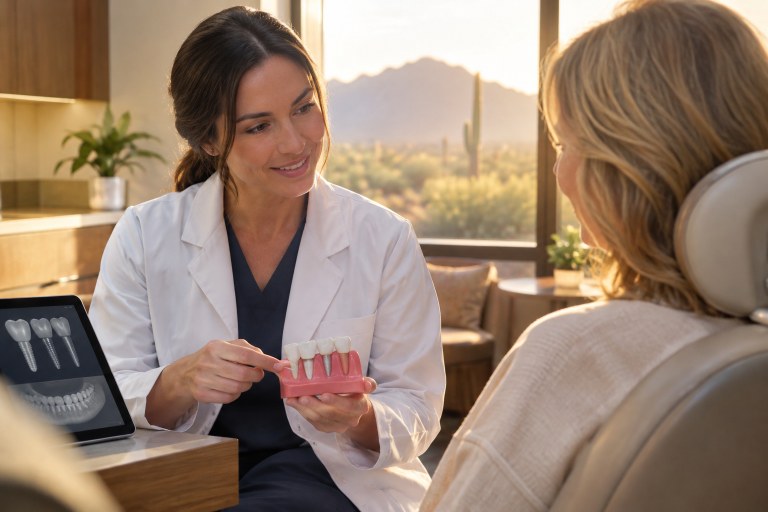
Dental implants are surgically placed supports that may hold a crown, bridge, or full-arch restoration. They can offer a stable, tooth-like feel, but candidacy depends on factors such as gum health, bone availability, medical history, and tobacco use. Treatment may involve healing time, imaging, bone or gum procedures, and temporary teeth while the final restoration is made. The ADA notes that implants can support single teeth, bridges, or dentures, depending on the treatment plan.
Implant-Supported Removable Options
An implant-supported removable denture combines a removable appliance with added implant retention. This may suit someone who wants more security during meals and conversations without opting for a fully fixed arch. The appliance still needs to be removed and cleaned, and the implants require consistent home care and professional follow-up.
Match the Choice to Your Daily Habits
- If convenience matters most:Compare daily cleaning steps, removal requirements, and follow-up visits.
- If stability matters most, ask how the option is expected to feel while eating, laughing, and speaking.
- If treatment speed matters most:Ask whether extractions, healing, grafting, or laboratory fabrication may extend the timeline.
- If appearance matters most: Discuss tooth shape, shade, gumline appearance, and how the restoration will blend with natural teeth.
- If surgery is a concern, review non-surgical alternatives and the trade-offs in stability or maintenance.
- If you travel or speak publicly, consider how secure the restoration feels and what care supplies may be needed when away from home.
Look Beyond the Initial Price
Cost matters, but comparing only the first estimate can be misleading. The total may vary based on the number of teeth replaced, materials, extractions, imaging, grafting, sedation, laboratory work, and temporary restorations. Over time, dentures may need adjustments or relines, while bridges and implant restorations may eventually require repair or replacement.
Request a written estimate that separates each stage of care. It is also reasonable to ask about insurance limits, financing terms, hygiene visits, replacement parts, and services that are not included in the quoted fee.
Health Factors That May Change the Plan
Active gum disease, infection, untreated decay, and unstable supporting teeth may need attention before tooth replacement begins. Jawbone quantity can affect implant planning, while diabetes, smoking, certain medications, and other health conditions may influence surgical healing. A thorough consultation may include dental images, bite evaluation, gum measurements, and a review of medical history.
A Simple Decision Process
- Identify the main concern, such as chewing, appearance, speech, discomfort, or loose dental work.
- Review how many teeth are missing and where they are located.
- Ask whether the gums, bone, and remaining teeth are ready for treatment.
- Set realistic limits for cost, time away from work, surgery, and home care.
- Compare the expected maintenance, repairs, adjustments, and replacement needs.
- Request alternatives if more than one approach is appropriate.
- Choose with realistic expectations about benefits, limitations, and daily care.
Questions to Ask at a Dental Consultation
- Which options fit the number and location of my missing teeth?
- Can any remaining teeth be saved?
- Do I need gum or bone treatment first?
- How long will each phase of treatment take?
- How will I clean the restoration every day?
- What adjustments, repairs, or future replacements should I expect?
- What is included and excluded in the written estimate?
Common Questions
Is the cheapest option always the best choice?
Not necessarily. Affordability is important, but comfort, function, maintenance, durability, and possible future costs deserve equal attention.
Can I change to a different option later?
Sometimes. Future choices may depend on the condition of the jawbone, gums, remaining teeth, and existing dental work.
How long does tooth replacement take?
Timelines vary widely. A straightforward restoration may take less time than treatment involving extractions, healing, grafting, implant placement, or multiple fittings.
Do removable options need special cleaning?
Yes. They require daily cleaning, safe storage when removed, gum care, and regular dental visits to check fit and oral health.
Choose the Life You Want to Live
The right tooth replacement choice in Arizona should support your health, budget, comfort, and routine. Compare more than appearance or starting price. A careful evaluation, a clear estimate, and an honest discussion of long-term care can help you choose a solution that feels practical and sustainable for daily life.
- Choosing a Tooth Replacement Option That Fits Your Daily Life in Arizona
- How Walkability, Local Services, and Community Life Shape Home Value in Niwot and Boulder County, Colorado
- Ensuring Flawless Audio with Professional Event DJ Services
- 6 Best AI Recruiting Platforms And Applicant Tracking Systems
- 6 Best Walk-In Tub Installers In Sacramento And The Bay Area