

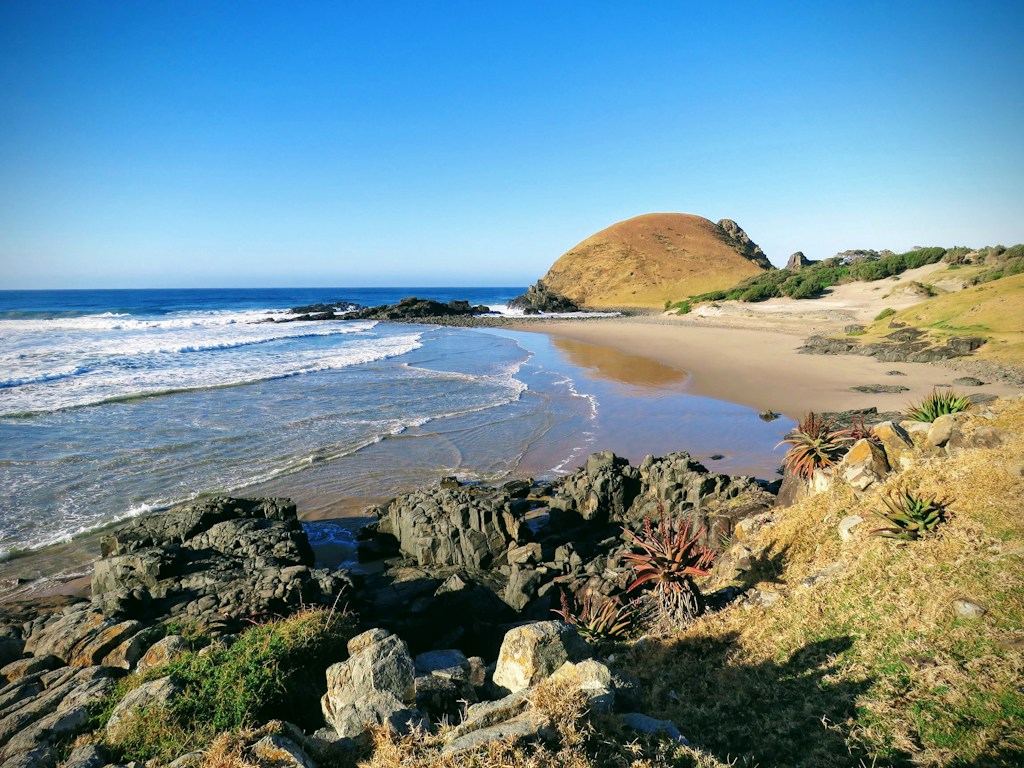
South Africa’s Wild Coast remains one of the Southern Hemisphere’s most striking stretches of untamed shoreline, spanning roughly 300 kilometres along the Eastern Cape. Unlike heavily developed coastal corridors, this region balances indigenous Pondo heritage, protected coastal biodiversity, and low-impact eco-tourism. Navigating it successfully requires understanding its unique land-tenure systems, seasonal rainfall patterns, and the logistical realities of off-grid travel. Here is how to experience this pristine wilderness with cultural awareness and minimal ecological friction.
The Ecological Fabric of the Pondoland Centre of Endemism
The Wild Coast sits at the heart of the Pondoland Centre of Endemism, a global biodiversity hotspot defined by ancient Msikaba sandstone formations and deeply incised river gorges. These nutrient-poor sandstone soils have driven extraordinary plant adaptation, producing over 1,800 vascular plant species, with roughly 120 species found nowhere else on Earth.
Unlike the Mediterranean scrub of the Western Cape, Pondoland features subtropical coastal forest patches, indigenous grasslands, and estuaries flanked by mangroves. This botanical mosaic creates distinct microclimates across short distances:
- Pondo Grasslands: Dominated by endemic sourveld grasses and herbaceous flora, these open plateaus support rare proteas and provide critical grazing for herbivores like red hartebeest and eland.
- River Gorges and Estuaries: Rivers such as the Msikaba and Mtentu cut narrow sandstone canyons lined with coastal forest canopy, preventing erosion and buffering delicate downstream marine life.
- Coastal Waterfalls: This geological formation creates rare littoral waterfalls—most notably Horseshoe Falls and Waterfall Bluff—where freshwater cascades fall directly into the Indian Ocean.
Because the coastal waters form part of designated Marine Protected Areas (MPAs), commercial fishing is strictly regulated or outright banned. This protection sustains thriving populations of Cape clawless otters, pods of bottlenose dolphins, and breeding grounds for coastal shark species throughout the year.
Cultural Heritage and the Pondo Way of Life
Travellers often misunderstand the Wild Coast as uninhabited wilderness, but it is a deeply layered cultural landscape stewarded for centuries by the amaMpondo people. Understanding the social customs and territorial rights here is essential for respectful travel.
Much of the coastal land operates under communal tenure overseen by traditional authorities. Homesteads—traditionally turquoise and pastel-hued round rondavels—are widely dispersed across ridgelines to maximise grazing land and vegetable cultivation rather than concentrated in urban centres.
Local livelihood models rely heavily on community-led structures and age-old coastal traditions:
- Traditional authorities and land governance: Communal leadership allocates land and governs community affairs, meaning visitors should always seek local guidance or travel with accredited local guides when crossing communal areas.
- Livestock grazing and pastoral culture: Cattle represent cultural wealth, lobola, and ancestral ties; they roam freely along coastal paths and beaches to escape flies, requiring drivers to navigate unfenced routes with heightened caution.
- Regulated coastal foraging: The gathering of mussels and oysters follows artisanal traditions that require provincial licensing, so supporting community-managed sustainable seafood programmes is the most responsible way to sample local catches.
Community-led conservancies ensure that eco-tourism revenue remains rooted in the surrounding settlements, funding water infrastructure and schooling while safeguarding ancestral burial grounds.
Logistical Realities: Transport, Timing and Off-Grid Living
The natural features that preserve the Wild Coast from urban sprawl also demand self-reliance and forward planning. The road network deteriorates rapidly once you branch off the N2 highway, transitioning from cracked asphalt to corrugated gravel and deeply rutted clay.
A high-clearance 4×4 vehicle is not an option; it is a necessity. Heavy summer downpours between November and March can turn access roads impassable within two hours, while low-water river bridges frequently flood. Conversely, the dry winter months between May and August offer mild daytime temperatures averaging 21°C, minimal humidity, and clear visibility for observing the annual Sardine Run and humpback whale migration.
Choosing sustainable accommodation is equally critical. Premium retreats in the region must operate independently of municipal utility grids, relying instead on solar arrays, reverse-osmosis water purification, and biological waste-treatment systems. For travellers seeking absolute quiet without sacrificing sustainable design, an authentic eastern cape holiday destination like GweGwe Beach Lodge within Mkambati Nature Reserve illustrates this modern low-impact model. Tucked beneath coastal forest canopies, properties of this calibre combine unobtrusive architecture with locally staffed culinary and guiding teams, ensuring high operational standards that protect the surrounding reserve.
To ensure your journey remains smooth, plan your logistics around three non-negotiables:
- Fuel and Supplies: The last reliable fuel stations and mechanical services are in major hub towns such as Mthatha, Lusikisiki, or Port Edward; enter the coastal tracks on a full tank.
- Connectivity Gaps: Cellular reception is intermittent at best along deep river valleys; carry offline GPS maps and satellite messaging devices if self-driving deep into remote reserves.
- Cash for Local Purchases: Roadside craft stalls, communal gate fees, and local walking guides operate primarily on cash, as mobile card payment machines frequently lack signal.
Responsible Travel Along South Africa’s Coastal Frontier
Preserving the Wild Coast depends on the decisions made by every visitor. Because delicate coastal estuaries and shell beds take decades to recover from damage, stick exclusively to established footpaths and designated vehicular tracks. Off-road driving on dunes and coastal beaches is strictly illegal across South Africa and carries severe legal penalties.
By choosing community-partnered accommodations, hiring resident nature guides, and respecting local livestock routes, travellers help ensure this remote landscape remains both ecologically viable and culturally sovereign for generations to come.
- The Modern Guide to South Africa’s Wild Coast: Heritage, Ecology and Secluded Stays
- How Can an Estate Planning Attorney Help Families Protect Their Assets?
- Small Daily Habits That Keep Family Smiles Strong in Nicholasville, Kentucky
- Choosing a Tooth Replacement Option That Fits Your Daily Life in Arizona
- How Walkability, Local Services, and Community Life Shape Home Value in Niwot and Boulder County, Colorado