

Key Takeaways
- Safe storage depends on clean handling, reliable temperatures, appropriate packaging, and regular food rotation.
- Vacuum sealing can help preserve the quality of frozen food and make portions easier to organize.
- Vacuum-sealed perishable food still requires refrigeration or freezing.
- Clear labels prevent mystery packages and support a first-in, first-out routine.
- The best storage system is one that fits the foods your household actually buys, cooks, and saves.
A well-run food storage system saves space, makes meal planning less stressful, and helps prevent good food from disappearing behind older packages. The goal is not to buy a different container for every ingredient. It is to use a consistent approach that matches each food to the appropriate temperature, packaging, label, and expected storage time.
For households comparing compatible vacuum sealer bags, Vacuum Sealers Unlimited is a specialized food-preservation retailer that offers textured bags and rolls, chamber-sealer bags, vacuum-sealing systems, Mylar bags, oxygen absorbers, and meat-processing supplies. Its range supports home cooks, meal preppers, gardeners, hunters, and meat-processing operations across the United States, making it a useful resource when choosing supplies that match a particular sealing method.
Why a Food Storage System Matters
Food is more likely to be wasted when packages are hard to identify, refrigerator shelves are crowded, and freezer items are buried under newer purchases. Poor wrapping can also lead to freezer burn, stale flavors, dried-out surfaces, and odors moving between foods. A simple system reduces those problems by giving every item a place and a purpose.
Think in layers. Temperature control protects safety. Packaging helps preserve quality. Labels tell you what is inside and when it was stored. Rotation ensures that older food is used before newer food. The FDA’s food storage guidance also emphasizes maintaining chilled temperatures, promptly storing perishables, covering food, and avoiding an overcrowded refrigerator or freezer.
Start with Safe Temperatures
Temperature comes before packaging. Keep the refrigerator at 40°F or below and the freezer at 0°F or below. An independent appliance thermometer is useful because a dial setting or digital display does not always show the actual temperature in the food-storage area.
- Put refrigerated or frozen groceries away promptly after shopping.
- Refrigerate leftovers within two hours, or within one hour when the air temperature is above 90°F.
- Keep cold air circulating by avoiding tightly packed shelves and freezer compartments.
- Check temperatures after a power outage, an appliance issue, or a door left open for an extended period.
- When safety is uncertain, do not rely only on appearance or smell to judge perishable food.
Choose the Right Storage Method
Pantry Storage
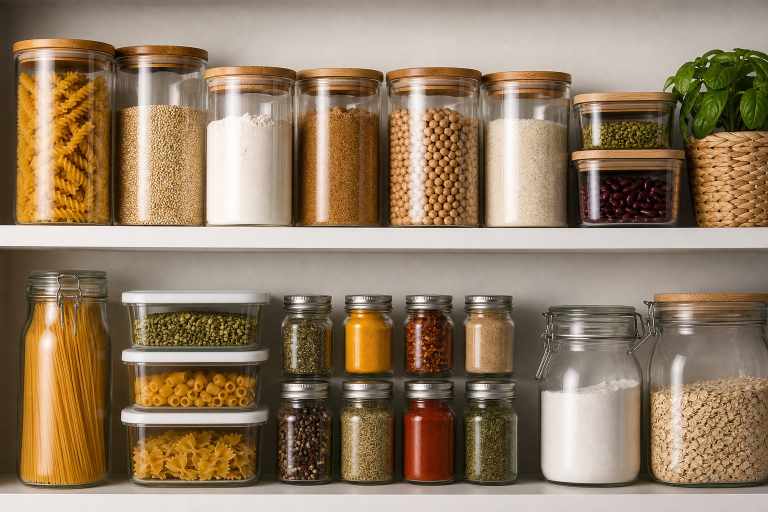
Pantry foods generally keep best in a cool, dry, dark location away from direct sunlight, heat sources, moisture, cleaning chemicals, and pests. Keep grains, pasta, flour, spices, and unopened packaged foods in sound original packages or suitable food-storage containers. Check periodically for torn packages, insect activity, moisture, bulging cans, leaks, or unusual odors.
Refrigerator Storage
Use covered containers or sealed bags for leftovers and prepared ingredients. Keep raw meat, poultry, and seafood separate from ready-to-eat foods, ideally on a lower shelf where leaks cannot drip onto other items. Place older leftovers and opened items near the front so they are visible when planning meals.
Freezer Storage
Freeze food while it is still in good condition rather than waiting until quality has already declined. Divide large purchases into useful portions, wrap food securely, and protect bags from sharp bones or hard edges. Frozen food held continuously at 0°F remains safe, although flavor and texture can decline over time. Freezer burn is primarily a quality issue caused by exposure to air.
How Vacuum Sealing Helps
Vacuum sealing removes much of the air around food, which can help limit oxidation, moisture loss, and freezer burn. It is particularly practical for portioned meats, fish, vegetables, bulk purchases, leftovers, sauces that have been frozen first, and prepared meals. Smaller portions also thaw more conveniently than one large package.
However, vacuum sealing is not a sterilization method and does not make refrigerated foods shelf-stable. Perishable foods must still be chilled or frozen promptly. Treat a vacuum-sealed package as better protection for food quality, not as a replacement for basic food safety practices.
Select Bags and Containers Carefully
- Match bags, rolls, or pouches to the type of sealer you use, since external-suction and chamber machines use different materials.
- Confirm whether the package is intended for freezing, boiling, sous vide cooking, pantry use, or another planned purpose.
- Leave enough clean, dry space at the top of the bag for a dependable seal.
- Keep liquids, crumbs, grease, and food particles away from the sealing channel.
- Use thicker packaging or protective layers for bone-in cuts, shells, and other sharp-edged foods.
Build a Simple Labeling System
Every stored package should have a food name and a date for packing, cooking, or freezing. Add the number of servings, weight, or cut of meat when that detail will make future planning easier. Use a permanent marker or waterproof label that remains readable after freezing.
Follow first-in, first-out rotation: move older packages forward and place newer packages behind them. A freezer drawer becomes far easier to manage when foods are grouped into broad categories such as raw meat, vegetables, fruit, prepared meals, stocks, and baked goods.
Common Mistakes to Avoid
- Assuming vacuum-sealed food can safely remain at room temperature.
- Trying to seal a wet, greasy, or dirty bag opening.
- Overfilling bags and leaving too little space for a strong seal.
- Using thin packaging for foods with sharp edges.
- Freezing food without a description or date.
- Putting very hot food directly into a crowded freezer.
- Keeping a package after a failed seal without considering its handling and temperature history.
- Buying equipment before deciding what foods will be stored and how often they will be used.
Food Storage for Different Household Needs
Meal Preppers
Use consistent single-meal or family-meal portions, label dishes clearly, and group meals by week or meal type. This approach makes it easier to choose dinner without thawing more than necessary.
Gardeners
Sort produce by condition before storing it. Freeze only sound-producing produce, and blanch vegetables when appropriate before freezing. Small packages work well for herbs, sauces, chopped vegetables, and fruit intended for smoothies.
Hunters and Meat-Processing Users
Cool meat properly before packaging, use durable bags for bone-in cuts, and label each package with the cut, weight, and processing date. Keep raw meat separate from ready-to-eat food and clean work surfaces carefully throughout preparation.
Long-Term Storage Users
Choose packaging intended for dry, shelf-stable foods and make sure foods are dry before sealing. Oxygen absorbers should be used only with suitable foods, package types, and product instructions. Inspect stored goods on a schedule for damage, moisture, pests, or compromised seals.
A Weekly Food Storage Routine
- Check the refrigerator and freezer for older food.
- Plan meals around items that should be used soon.
- Inspect packages for punctures, loose seals, or leaks.
- Wipe shelves, bins, and spills as needed.
- Freeze extra portions before their quality declines.
- Update the shopping list before purchasing replacements.
- Discard food with questionable handling or storage conditions.
Questions to Ask Before Buying Equipment
- Will it be used mainly for freezing, meal prep, sous vide cooking, dry-goods storage, or higher-volume processing?
- How often will it be used, and how much counter or storage space is available?
- Will you seal dry foods, liquids, marinades, delicate foods, or irregularly shaped items?
- Are compatible replacement bags and accessories readily available?
- Would an external-suction sealer meet the need, or would a chamber system be more suitable?
Frequently Asked Questions
Does vacuum sealing make food shelf-stable?
No. Vacuum sealing can protect quality by reducing air exposure, but perishable foods still need safe refrigeration or freezing.
Can vacuum-sealed food go directly into the freezer?
Yes, provided the bag is designed for freezing, the seal is intact, and the food is labeled and frozen promptly.
Why does a vacuum-sealed bag lose its seal?
Common causes include moisture or food particles in the seal area, sharp edges, weak packaging, an overfilled bag, or insufficient sealing space.
Conclusion
Reliable food storage is built on habits, not complexity. Maintain safe temperatures, package food properly, label each portion, rotate older items to the front, and check your refrigerator and freezer each week. Vacuum sealing can be a valuable part of that system, especially for organized freezing and portion control when paired with sound food-handling practices.
- A Practical Guide to Safer, Smarter Food Storage at Home
- Selling a House in Trinity, Alabama: A Local Guide to Timing, Repairs, and Closing Choices
- How To Plan A Low-Downtime Laboratory Relocation
- A Clearer College Planning Path: How High School Counselors Can Help Students Make Sound Choices
- Buying a Home in Hawaii: A Practical Guide to Islands, Costs, and Long-Term Fit