

Table of Contents
- Understanding Chronic Sinusitis
- What Is Balloon Sinuplasty?
- Traditional Sinus Surgery Explained
- Key Differences Between the Procedures
- Pros and Cons of Each Procedure
- Determining the Right Treatment for You
- Conclusion
Chronic sinusitis affects millions of people worldwide, causing persistent nasal congestion, facial discomfort, and a significant decrease in quality of life. When medications and other non-surgical treatments no longer provide relief, patients often turn to more direct approaches such as sinus surgery. Balloon sinuplasty and traditional sinus surgery are two widely recommended options, each offering distinct techniques and outcomes for long-term sinus health.
If you find yourself struggling with ongoing sinus symptoms, understanding the surgical interventions available is important for regaining comfort and normal breathing. This guide examines the vital differences between balloon sinuplasty and traditional sinus surgery, outlining their unique benefits and risks. With well-informed guidance, you can choose the solution that fits your symptoms and lifestyle, working in partnership with your ENT specialist every step of the way.
As the range of sinus treatments has expanded, so have patient expectations for recovery, comfort, and long-term results. Whether you are curious about less invasive options or have been advised to consider full surgical intervention, it is essential to understand how the two procedures compare. By exploring both the science and patient experiences behind each method, this article aims to provide a balanced and clear understanding of what to expect.
Choosing the right approach often depends on your specific anatomy, medical history, and severity of sinus disease. Consulting an experienced specialist will ensure that all factors influencing your diagnosis and treatment are thoroughly reviewed.
Understanding Chronic Sinusitis
Chronic sinusitis refers to inflammation of the sinus linings that persists for 12 weeks or longer, even after standard therapies. Symptoms include nasal congestion and blockage, facial pain or pressure, and a consistent reduction in the ability to smell. Triggers of chronic sinusitis are varied, ranging from allergies and bacterial or fungal infections to anatomical issues such as a deviated septum or nasal polyps.
The chronic nature of the condition often disrupts sleep, concentration, and productivity. For these reasons, persistent sinus inflammation is a significant health concern that may impact work, family life, and mental well-being. According to Harvard Health, chronic sinusitis is one of the most common chronic illnesses, highlighting the need for lasting treatment solutions.
What Is Balloon Sinuplasty?
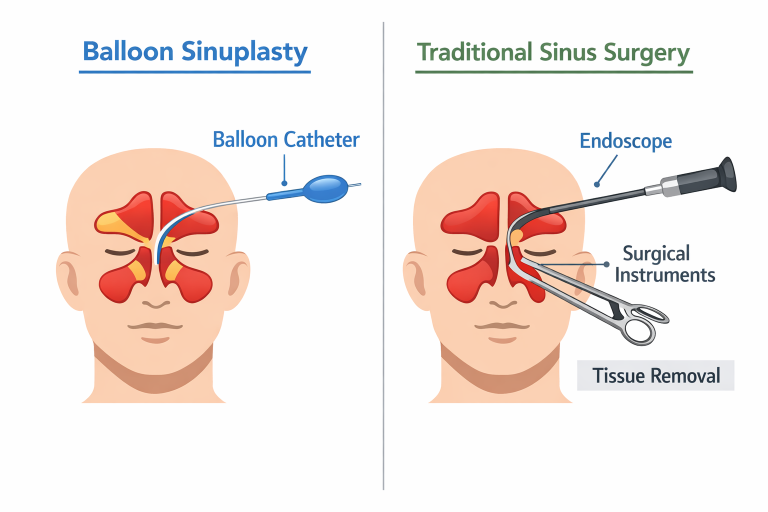
Balloon sinuplasty is a minimally invasive procedure designed to enhance sinus drainage by widening blocked sinus passageways. The technique involves guiding a small, flexible balloon catheter through the nasal cavity and into the affected sinus. Once in place, the balloon is gently inflated to expand the sinus opening, allowing trapped mucus to drain and reducing pressure and pain. After dilation, the balloon is deflated and removed, with the tissue left intact and undamaged.
This approach is most commonly performed in an outpatient setting under local anesthesia, minimizing both procedure time and patient downtime. According to the JAMA Otolaryngology journal, balloon sinuplasty demonstrates high safety and persistent symptom improvement in patients with uncomplicated chronic sinusitis.
Traditional Sinus Surgery Explained
Traditional sinus surgery, also called Functional Endoscopic Sinus Surgery (FESS), takes a more direct approach. The procedure uses small endoscopes and instruments to remove diseased tissue or bone and clear out blockages that prevent normal sinus drainage. FESS is typically performed under general anesthesia and is indicated for individuals with severe sinus disease, particularly when anatomical defects or substantial tissue growths (such as polyps) are present.
The goal of traditional sinus surgery is to reopen sinus pathways permanently. While it is more invasive, it allows surgeons to address complex problems and underlying structural issues. The Mayo Clinic notes that FESS has become a standard of care for those who do not respond to medications and require more comprehensive surgical management.
Key Differences Between the Procedures
- Invasiveness: Balloon sinuplasty is less invasive, as it does not cut or remove tissue, whereas traditional sinus surgery involves excising tissue and bone for access and clearance.
- Anesthesia: Balloon sinuplasty is usually performed with local anesthesia; traditional sinus surgery generally requires general anesthesia due to its complexity.
- Recovery Time: Recovery from balloon sinuplasty is often just a day or two, with minimal discomfort. Recovery from traditional sinus surgery is longer, often requiring up to a week before returning to regular activities.
- Effectiveness and Indication: Both procedures offer symptom relief. However, balloon sinuplasty is best suited for patients without advanced disease or significant anatomical deviations. FESS addresses more complicated or severe cases, sometimes in combination with other procedures.
Pros and Cons of Each Procedure
Balloon Sinuplasty
- Pros:
- Minimally invasive, with little to no bleeding or discomfort.
- Short and predictable recovery period.
- Low risk of postoperative complications.
- Cons:
- Not ideal for patients with severe disease, polyps, or structural defects.
- Long-term outcomes may be less predictable if sinus problems are advanced.
Traditional Sinus Surgery
- Pros:
- Effective for complex or severe sinus issues, including those caused by blockages and polyps.
- Addresses anatomical concerns, such as a deviated septum, during the procedure if needed.
- Cons:
- Greater invasiveness means more discomfort and a longer recovery period.
- Increased potential for postoperative complications such as infection or bleeding.
Determining the Right Treatment for You
The suitability of balloon sinuplasty versus traditional sinus surgery depends on the severity and cause of your chronic sinusitis. Patients with mild to moderate disease and no major structural abnormalities are often good candidates for balloon sinuplasty. In contrast, those with extensive disease, previous sinus surgeries, or anatomical problems may benefit more from traditional surgery. An ENT specialist will use a combination of symptom review, nasal endoscopy, and imaging studies to determine which option best meets your needs. A thoughtful, personalized approach can make a significant difference in symptom relief and the quality of recovery.
Conclusion
Both balloon sinuplasty and traditional sinus surgery are valuable options for individuals struggling with chronic sinusitis. The right choice depends on your medical history, the extent of your sinus disease, and your desired recovery experience. By understanding all your options and collaborating closely with your ENT specialist, you can confidently select the treatment that promises the best outcome for your condition and lifestyle.
- What You Need To Know About Hydrafacial for Acne-prone Skin
- How Collaborative Approaches Shape Modern Pediatric Therapy
- Comparing Balloon Sinuplasty and Traditional Sinus Surgery: A Comprehensive Guide
- Innovative Approaches to Senior Socialization and Wellbeing
- Exploring Culinary Journeys: Food and Travel Adventures Around the World