

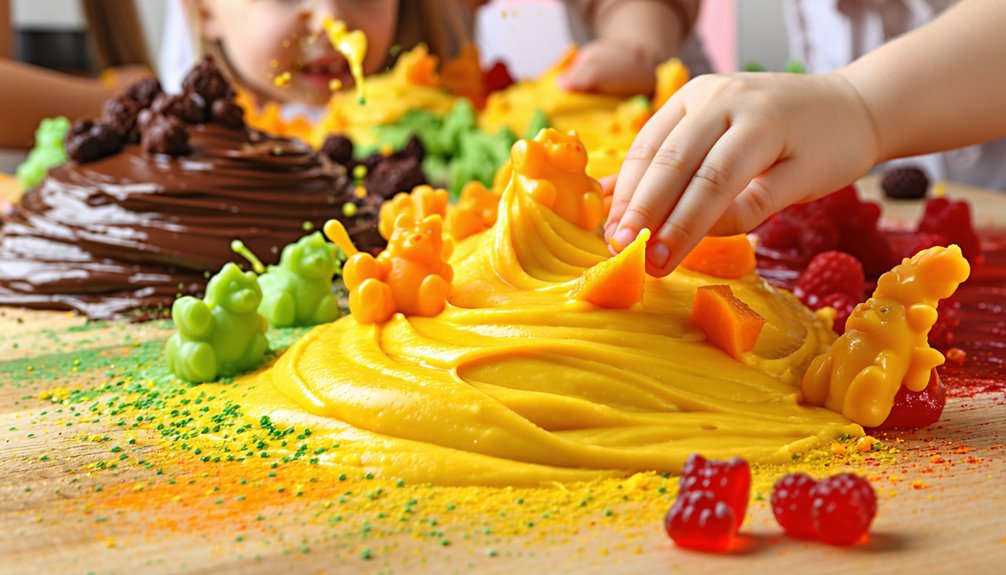
Learning doesn’t have to be systematic. It doesn’t need pressure or checkboxes. Some of the best kinds of learning are silent. Unofficial, guided by curiosity. It happens when we try something new for the sole reason that we want to. When our hands are occupied and our minds are receptive. Or when we learn with others and feel connected.
Taste, craft, and community is learning that feels alive. Sensory, social, inherently human. It asks people to show up completely. With their hearts and minds and hands. It prizes exploration over results. Progress over perfection. Experience over achievement.
The Power of Learning Through Taste
Learning through taste is perhaps one of the most instinctual methods. Taste activates memory, emotion, and curiosity simultaneously. With just one flavor someone can ask more questions than you could teach them in a lecture. Where did this come from? Why does it taste like that? How did you make it?
When we teach through taste people open up and allow themselves to learn naturally. They slow down, focus, and trust their senses. Consuming food and drink teaches us to find wonder in our daily habits. Coffee, bread, and chocolate are no longer just items we buy at stores. They become windows into culture, science, and craft.
This is something I’ve always loved about hosting home roasting classes. Students don’t learn just how to roast coffee, they learn to identify small differences in aroma, sound, and even color. They learn how time and temperature changes flavor. All of a sudden, that morning routine cup no longer feels automatic but filled with intention and discovery. There’s trial and error, anticipation with the roast results. Learning becomes effortless because you are curious and being rewarded.
Lastly, tasting teaches us to be present. Whether you are playing around with ferments, spice blends, or understanding how ingredients change with time, you learn to listen and focus. In that focus you find a sense of peace and grounding within your learning.
Craft as a Path to Confidence
Craft is powerful in its own way, too. When you make something, learning feels different. It feels real. You can see it happening. You can touch what you made. You can take it home.
It teaches patience and creative problem solving. How to roll with the punches when your plan doesn’t quite work. Clay cracks? Learn to work with it (literally!). Wood splits? Learn to work around it. Wax hardens too quickly? Learn to move faster next time. These aren’t failures, they’re opportunities to learn perseverance and build confidence.
Working with your hands can also help you reconnect with your creative side. Sure, some people just consider others creative. Artists. Designers. But taking a craft class can help you learn how silly that notion is. There’s something special about looking at something you created with your own two hands. Even if it’s “wrong” you’ll find yourself proud of your work. It’s a weird feeling you didn’t know you were expecting.
And when everything else in your life makes you feel like you have to be better than everyone else, crafting is a nice reprieve. There’s not one “correct” way for your project to turn out. Your project is an extension of you. And that makes the learning process feel rewarding instead of stressful.
Why Community Makes Learning Deeper
Learning with others makes learning richer. Community creates warmth, support, and shared energy. Community turns classes into experiences and lessons into memories.
Learning in a group allows people to feel safe asking questions and acknowledging what they don’t know. Watching others learn normalizes the struggle. Everyone laughs off mistakes. Conversations lead to new ideas. Being in a group reminds learners that no one has it all together.
Community-based learning also dismantles the idea of teacher and student. Everyone walks into a room with different skills, backgrounds, and knowledge. One may enter a classroom knowing nothing about a topic but leaves empowered by the encouragement of the group. Some might come to realize they have something to teach by virtue of showing up.
Oftentimes connections made in these experiences transcend the classroom. Learners find others with similar interests to exchange tips with and learn from outside of class. Community creates continuity and emotion in learning.
Learning That Invites Play
One of the best aspects of learning with taste, craft and community is that it can feel playful. There’s space for experiments. Questions. Silly mistakes. It stops feeling like something you have to be good at and starts feeling like something you get to play with.
Play opens doors. When people aren’t afraid to look stupid, they try new things. Take more risks with their creativity. Ask questions. All of which leads to learning faster, in a more enjoyable way.
Playfulness also reinserts a sense of fun into the learning process. Rather than optimizing every moment for maximum efficiency, people linger. They take the time to enjoy small victories. That positive feeling keeps them curious instead of burnt out.
Slowing Down in a Fast World
The learning experiences we’ve described above go against our current culture of speed. They encourage participants to pause and give attention. You can’t hurry through roasting coffee, pulling clay from a wheel, or cooking with others.
Taking time also allows people to be present with themselves and their fellow learners. There’s space to reflect on and celebrate what you’re doing. Learning becomes less about achievement and more about showing up.
Finally, when we slow down like this, we retain what we learn longer. Think about how you learn something new versus how you feel when you learn something new. Emotion sticks with us longer than fact.
Learning as a Lifelong Pleasure
Maybe most significantly, taste, craft, and peer-to-peer learning transform what learning means to people. It makes people remember that learning doesn’t stop when you leave school. It doesn’t have to be certified to be legitimate. It can be done just because it’s fun.
The more people have experiences like this, the more they’ll want to learn for fun again. They start to make curiosity a lifestyle, not a chore. Learning becomes interwoven into the fabric of life.
They teach people to stay curious, playful, and engaged with the world around them. Helping folks be creative. Building confidence. Connecting us. Not only is learning no longer something you do—it’s how you live well.
Rediscovering the Joy of Curiosity
Learning through taste, craft, and community is a reminder that curiosity isn’t something we grow out of, it’s something we forget how to ask for. When invited into the right space, curiosity runs right back in through the door. At the dinner table, over tools, or in a room of great conversation you remember why you loved learning so much in the first place. It’s fun again. It’s hands on. It’s relatable. And it just feels right.
- Planning Chiropractic Visits Around Pain, Recovery, and Daily Life
- When Should You Speak to a Casselberry Car Accident Lawyer?
- How Corporate Lawyers Help Companies Manage Risk and Compliance
- Ken Raymie: Why a Healthy Work-Life Balance Matters for Today’s Workforce
- How to Buy Antique Furniture at Auction Without Overpaying