


Understanding the Foundations of Trauma-Informed Systems
The journey toward comprehensive mental health and trauma care begins with a fundamental shift in perspective. For decades, traditional mental health models often focused on diagnosing and treating symptoms, sometimes overlooking the underlying experiences that contributed to an individual’s distress. This approach, while well-intentioned, could inadvertently lead to a feeling of being “broken” or “disordered.”
Paradigm Shift: Moving Beyond Symptom Management
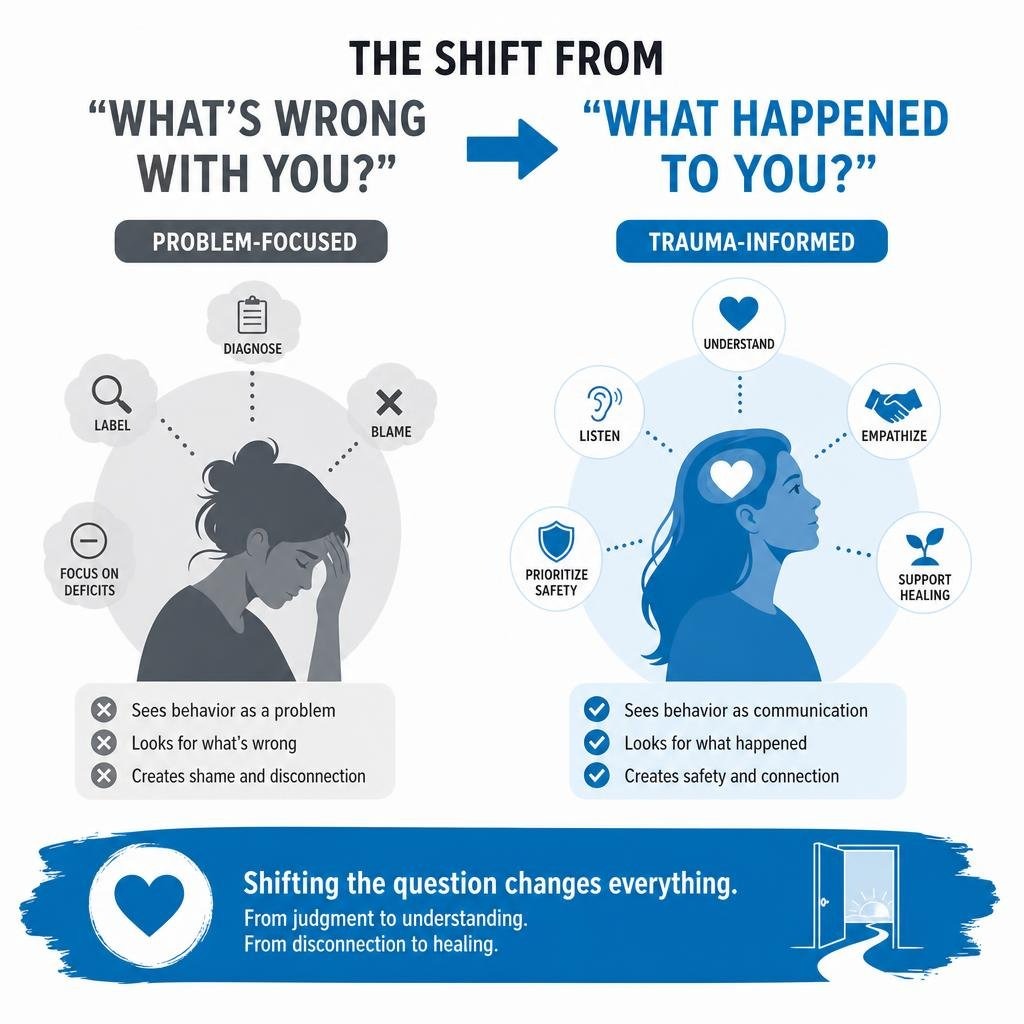
The core of trauma-informed care (TIC) lies in its paradigm shift: moving from “What’s wrong with you?” to “What happened to you?” This seemingly simple change reorients the entire care process. Instead of viewing challenging behaviors or emotional dysregulation as inherent flaws, we understand them as behavioral adaptations and coping mechanisms developed in response to traumatic experiences. This shift acknowledges the profound impact of adverse experiences on an individual’s neurobiological responses and their capacity for emotional regulation.
By adopting this perspective, clinical inquiry becomes less about pathologizing and more about understanding. It fosters patient autonomy, allowing individuals to actively participate in their healing journey as experts of their own experiences. This approach recognizes that nervous system stabilization is often a precursor to deeper therapeutic work, emphasizing safety and self-regulation techniques from the outset.
Core Principles of Comprehensive Mental Health and Trauma Care
The Substance Abuse and Mental Health Services Administration (SAMHSA) outlines six key principles that guide trauma-informed approaches. These principles are not merely clinical guidelines; they represent a cultural and organizational commitment to creating healing environments.
- Safety: Ensuring physical safety and psychological trust for both clients and staff. This includes creating environments that feel secure and predictable, minimizing triggers, and fostering a sense of calm.
- Trustworthiness and Transparency: Building and maintaining trust through clear, honest communication about policies, procedures, and expectations. This helps counteract the betrayal of trust often experienced in trauma.
- Peer Support: Incorporating individuals with lived experience into the care system. Peer support offers a powerful message of hope and recovery, demonstrating that healing is possible and fostering a sense of community.
- Collaboration and Mutuality: Recognizing that healing happens in relationships and that power dynamics should be leveled. Decisions are made with, not for, the individual, fostering a sense of shared responsibility and respect.
- Empowerment, Voice, and Choice: Believing in individuals’ strengths, resilience, and ability to heal. Providing opportunities for individuals to have a voice in their care and make choices about their treatment path is crucial for restoring agency.
- Cultural, Historical, and Gender Issues (Humility and Responsiveness): Actively moving past cultural stereotypes and biases, incorporating culturally relevant services, and addressing historical trauma. This principle emphasizes humility and responsiveness to diverse backgrounds and experiences.
These principles apply to both clinical and organizational settings. Clinically, they inform how providers build rapport, conduct assessments, and deliver interventions. Organizationally, they dictate policies, staff training, physical environment design, and even hiring practices. The goal is to integrate trauma knowledge into every facet of an organization, ensuring that every interaction, from the front desk to the therapy room, is imbued with a trauma-informed lens.
Feature Traditional Psychiatric Models Trauma-Informed Systems FocusSymptom reduction, diagnosis, pathology Understanding root causes, healing, resilience, adaptation Question “What’s wrong with you?” “What happened to you?” Client Role Passive recipient of treatment Active participant, co-creator of treatment plan, expert of their experience Power Dynamics Often hierarchical, provider-driven Collaborative, mutual, power-sharing Environment Clinical, sometimes sterile, focus on control Safe, welcoming, empowering, focus on choice Behavior InterpretationMaladaptive, disordered Adaptive coping, understandable responses to adversity Retraumatization RiskHigher, due to lack of awareness or coercive practices Actively minimized through policies, practices, and staff training Staff Awareness May be limited to specific clinicians Organization-wide, integrated into all roles and interactions Cultural Responsiveness Often generalized or an afterthought Central to understanding and delivering equitable care, cultural humility Outcome MeasureSymptom reduction, diagnostic remission Holistic well-being, functional improvement, empowerment, self-efficacy Clinical Integration: Co-Occurring Conditions and Specialized Modalities
Trauma’s pervasive influence extends beyond discrete mental health conditions, often intertwining with substance use disorders and impacting overall physical and emotional well-being. A comprehensive approach necessitates multidisciplinary coordination and diagnostic precision to offer holistic assessment and a true continuum of care.
Addressing Intersecting Mental Health and Substance Use Disorders
The connection between trauma and substance use disorders is well-documented. Many individuals with a history of trauma, particularly those with complex or chronic trauma, may develop substance use patterns as a form of self-medication. Substances can temporarily numb emotional pain, quiet intrusive thoughts, or regulate overwhelming physiological responses. This creates a challenging dual diagnosis scenario where both conditions exacerbate each other.
Effective comprehensive care recognizes these intersecting issues and moves beyond treating them in isolation. It integrates behavioral health services, employing clinical screening tools to identify trauma histories and co-occurring conditions early. This integrated treatment approach acknowledges that addressing trauma is often crucial for sustainable recovery from addiction. For instance, specialized programs focusing on trauma-informed addiction treatment are designed to help individuals process their trauma in a safe and supportive environment, reducing the reliance on substances as coping mechanisms. This strategy is vital for relapse prevention, as it addresses the emotional triggers and underlying pain that often drive substance use.
Integrating Comprehensive Mental Health and Trauma Care into Specialized Programs
Beyond addressing co-occurring disorders, comprehensive trauma care integrates specialized, evidence-based modalities designed to target the unique impacts of trauma on the brain and body. These approaches move beyond traditional talk therapy to address the deep-seated effects of trauma.
Modalities such as Eye Movement Desensitization and Reprocessing (EMDR) therapy, Cognitive Processing Therapy (CPT), and Somatic Experiencing are highly effective. EMDR helps individuals process traumatic memories and reduce their emotional charge, while CPT assists in challenging unhelpful thoughts and beliefs stemming from trauma. Somatic regulation techniques focus on releasing trauma stored in the body, helping to regulate the nervous system and restore a sense of safety within oneself.
These specialized interventions, often delivered through advanced counseling and psychotherapy services, focus on nervous system repair and building resilience. They help individuals develop new coping skills, improve emotional regulation, and integrate their traumatic experiences into their life narrative in a healthier way. This integration ensures that treatment is not just symptom-focused but deeply transformative, fostering lasting healing and overall well-being.

Frameworks for Comprehensive Mental Health and Trauma Care in Organizations
Implementing comprehensive mental health and trauma care requires more than just individual clinical expertise; it demands systemic change, administrative commitment, and a complete overhaul of institutional safety and procedural reform. Organizations must actively cultivate environments that prevent re-traumatization and support the well-being of both those receiving and providing care.
System-Wide Policy and Workplace Environmental Redesign
For an organization to truly become trauma-informed, its principles must be woven into the fabric of its operations. This begins with universal screening for trauma histories upon entry into services, ensuring that providers are aware of potential trauma triggers and can tailor care accordingly. Physical architecture plays a role too; creating calming, non-threatening spaces can significantly impact a client’s sense of safety. Simple elements like soft lighting, comfortable seating, and clear wayfinding can make a difference.
Furthermore, policies must be reviewed to eliminate practices that could be re-traumatizing. This includes a strong emphasis on de-escalation protocols that prioritize verbal and relational strategies over coercive interventions. The goal is to significantly reduce and, ideally, eliminate the use of seclusion and restraint, which are now widely recognized as harmful and re-traumatizing. Training staff in these non-coercive techniques is paramount. Intake workflows should be designed to minimize repetitive recounting of traumatic events, and staff education must be ongoing, ensuring all personnel understand the impact of trauma and how to respond sensitively.

Mitigating Secondary Traumatic Stress and Provider Burnout
Working with individuals who have experienced trauma can be profoundly rewarding, but it also carries significant risks for healthcare providers. Exposure to clients’ traumatic narratives can lead to vicarious traumatization, where providers experience symptoms similar to those of their clients. This, along with the emotional demands of caregiving, can contribute to compassion fatigue and provider burnout.
Comprehensive trauma-informed organizations recognize and proactively address these challenges. They implement strategies such as reflective supervision, providing a safe space for staff to process their emotional responses and receive guidance. Peer debriefing sessions allow colleagues to support each other, sharing experiences and coping strategies. Promoting a culture of staff wellness, including access to mental health support, flexible schedules, and opportunities for self-care, is crucial for institutional retention. When staff feel supported and cared for, they are better equipped to provide high-quality, compassionate care.
Here are some key organizational resilience practices:
- Regular, structured supervision: Focus on emotional processing, not just case management.
- Peer support groups: Facilitate shared experiences and mutual understanding among staff.
- Mandatory self-care breaks: Encourage and provide time for personal rejuvenation.
- Trauma-informed training for supervisors: Equip leaders to recognize and address staff distress.
- Clear boundaries and workload management: Prevent overextension and chronic stress.
- Access to mental health resources: Offer confidential counseling and support services.
- Celebration of successes: Acknowledge and appreciate staff contributions to foster morale.
Sociocultural Dimensions and Community-Based Reintegration
Comprehensive mental health and trauma care extends beyond clinical walls, recognizing that trauma is often shaped by and embedded within broader sociocultural contexts. Addressing structural barriers and promoting health equity are crucial for fostering genuine healing and community well-being.
Cultural Humility, Intergenerational Impact, and Structural Health Equity
Trauma does not occur in a vacuum. Sociocultural factors, including race, ethnicity, gender, sexual orientation, socioeconomic status, and disability, profoundly influence how trauma is experienced, expressed, and treated. Historical trauma, such as the intergenerational impact of slavery, colonization, or systemic discrimination, can manifest as collective emotional and psychological wounds that persist across generations. These experiences contribute to racial disparities in health outcomes and access to care.
A truly trauma-informed approach demands cultural humility, moving beyond mere cultural competence to a lifelong commitment to self-reflection and learning about others’ cultures. It requires an understanding of how marginalization impacts individuals and communities, and how systemic biases can create barriers to equitable treatment. Building community trust, particularly in populations historically underserved or mistreated by healthcare systems, is paramount. This means actively working to dismantle structural barriers and advocate for health equity, ensuring that accessible care is available to all, irrespective of their background. By acknowledging and integrating these complex dimensions, we can provide care that is not only clinically effective but also culturally resonant and socially just.
Peer Support and Wraparound Reintegration Services
The power of lived experience is central to comprehensive trauma care. Peer support, delivered by individuals who have navigated their own recovery journeys, offers invaluable hope, validation, and practical guidance. These individuals serve as non-clinical mentors, fostering a sense of mutual aid and connection that can be profoundly healing. They understand the challenges and triumphs of recovery in a way that professionals, however empathetic, cannot.
Beyond emotional support, comprehensive care often includes wraparound reintegration services. Trauma can disrupt various aspects of an individual’s life, including employment, housing, education, and social connections. Socioeconomic stabilization—addressing these practical needs—is critical for sustained recovery. This might involve connecting individuals with job training programs, housing assistance, legal aid, or educational resources. Building strong community networks helps individuals re-establish a sense of belonging and purpose, moving from isolation to active participation in their communities. These services recognize that healing is a holistic process, encompassing not just mental health but also social determinants of health.
Frequently Asked Questions About Trauma Care
As we continue to advance our understanding and implementation of comprehensive mental health and trauma care, several common questions arise. Addressing these helps clarify the core tenets and practical applications of this transformative approach.
What is the primary objective of trauma-informed care?
The primary objective of trauma-informed care is to create environments and systems that recognize the widespread impact of trauma, understand potential paths for recovery, and integrate this knowledge into policies and practices. Its ultimate goal is to prevent re-traumatization, cultivate safety, foster empowerment, and promote relational healing for all individuals accessing services. It’s about shifting the focus from blame to understanding, facilitating genuine recovery and resilience.
How do trauma-informed models address seclusion and physical restraint?
Trauma-informed models actively seek to reduce and ultimately eliminate the use of seclusion and physical restraint. These coercive practices are recognized as highly re-traumatizing and often exacerbate distress rather than alleviate it. Instead, trauma-informed approaches prioritize crisis de-escalation techniques, which involve verbal intervention, active listening, and understanding the underlying needs driving a person’s distress. They also emphasize sensory modulation strategies, such as providing calming spaces or sensory tools, to help individuals regulate their emotions and prevent escalation. The focus is on creating a safe environment through proactive measures and supportive interactions, reducing injury and eliminating coercive interventions.
Why are sociocultural factors critical in trauma assessment?
Sociocultural factors are critical in trauma assessment because they provide essential context for understanding an individual’s experiences and responses to trauma. Trauma is not a universal experience; it is shaped by an individual’s cultural background, historical context, community, and social identity. Ignoring these factors can lead to misdiagnosis, ineffective treatment, and further systemic bias. A sociocultural lens allows providers to contextualize symptoms, recognize the impact of systemic oppression and historical trauma, and develop equitable treatment plans that are individualized and culturally responsive. It ensures that care is delivered with cultural humility, building trust and promoting more effective and respectful healing journeys.
Conclusion
The evolution towards comprehensive mental health and trauma care represents a monumental step forward in healthcare. By September 2026, we anticipate even greater integration of these principles across all sectors. This approach moves beyond superficial symptom management to embrace a deeper understanding of human experience, recognizing that true healing requires acknowledging “what happened to you” rather than simply asking “what’s wrong with you.”
This holistic healing framework not only transforms individual lives by fostering resilience and well-being but also drives systemic transformation within healthcare organizations. The benefits are far-reaching, leading to improved patient engagement, better health outcomes, reduced re-traumatization, and a more supportive environment for both those seeking and providing care. As we continue to champion these principles, we are not just modernizing healthcare; we are building a more compassionate, effective, and equitable system that truly empowers individuals on their journey toward lasting recovery.
- How To Choose Alloy Steel For Strength, Wear, And Machining
- Comprehensive Mental Health and Trauma Care
- Una lesión en el trabajo no es solo un problema médico
- A Health-First Guide to Cosmetic Dental Choices for a Natural-Looking Smile
- When Dentures Feel Unsteady: Tampa, Florida Guide to Fixed Smile Options